

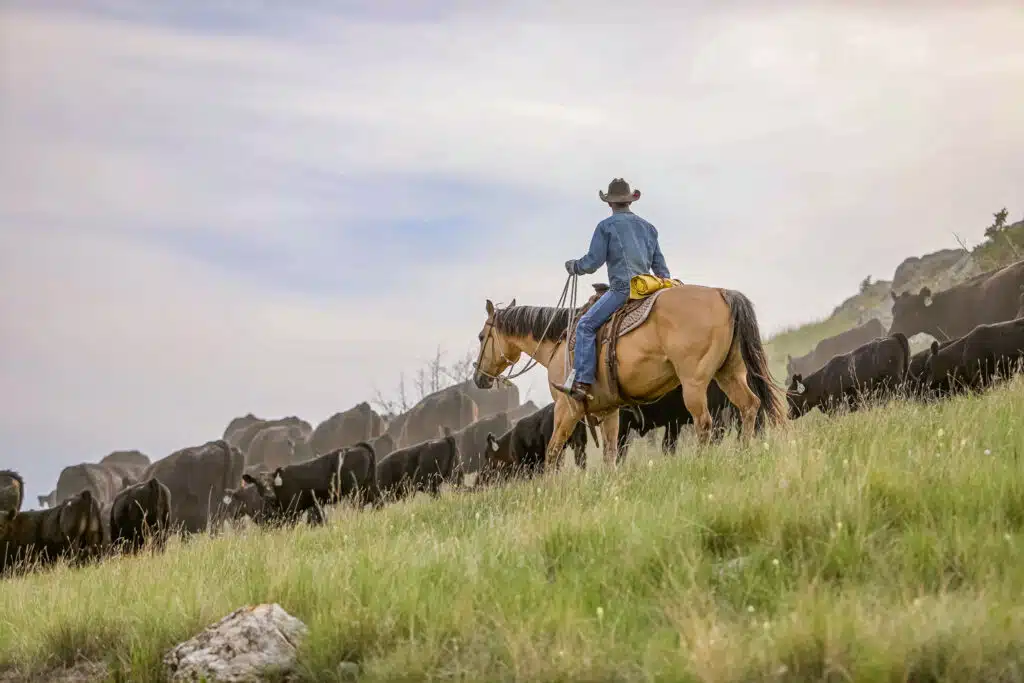
In the sweeping landscapes of Montana, Utah, Idaho, Wyoming, and Nebraska, ranch buyers seek properties where productivity meets unparalleled recreational opportunities. From casting a line in pristine trout streams to tracking elk across rugged hills, these ranches offer a lifestyle steeped in the West’s natural splendor. For working ranches, conventional wisdom once suggested cattle and elk were in direct competition. With the recreational ranch boom, that idea was challenged, as owners began to ask, can a working ranch also support thriving elk herds? The answer was yes, and with smart grazing, it can boost your property’s value and output. According to our own Jack McInerney, a seasoned Swan Land Company broker who has led multiple projects restoring and enhancing wildlife habitats and production on ranches. “Cattle grazing systems can in fact increase elk utilization on a ranch”.
 |
 |
A Case Study: Rest and Rotation at Wall Creek, Montana
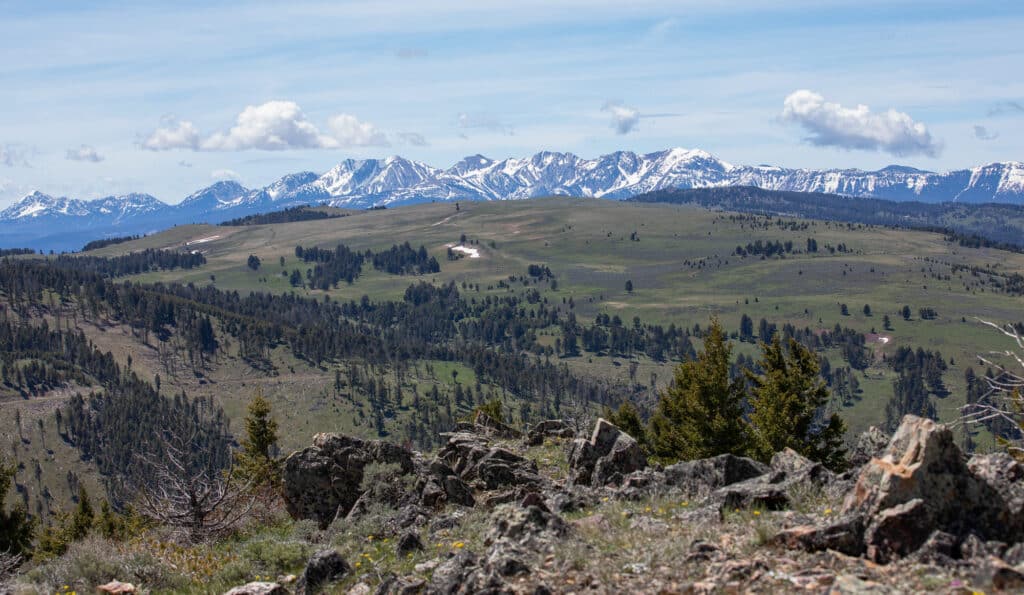
At the Wall Creek Wildlife Management Area in the Madison Valley near Ennis, managers shifted from a “no cattle” policy to a coordinated rest-and-rotation grazing program. The goal was to keep elk on public winter range, improve forage quality, and reduce game damage on neighboring ranches. Wall Creek was purchased in 1960 to protect critical elk winter habitat, and the rotation program was introduced in the early 1980s.
The system divides pastures into four seasonal units across elevation bands. One is grazed in the spring, another in early summer when grasses are actively growing, a third in the fall, and the last is rested for the entire growing season. On average, about 700 head of cattle rotate through these pastures each year under carefully managed timing. Over nineteen years of monitoring, biologists found that elk consistently selected the pastures that had been rested the previous year and avoided those grazed during the peak of summer. Elk use of the grazing system increased steadily alongside herd growth, rising from about twelve hundred animals in the late 1980s to more than three thousand by the mid-2000s. Long-term vegetation studies confirmed that this approach maintained stable native grass communities dominated by bluebunch wheatgrass, prairie junegrass, and Sandberg bluegrass. The rest periods allowed these grasses to persist and remain productive, ensuring forage for both cattle and elk well into the future.
Wall Creek has since expanded into a cooperative effort with the Wall Creek Grazing Association, the Bureau of Land Management, the U.S. Forest Service, and adjacent state lands. Together, the program now covers roughly sixteen thousand eight hundred acres and stands as one of the clearest examples of livestock and wildlife being managed successfully side by side. The lesson for ranch buyers is clear, planned grazing improves forage health, supports larger elk herds, reduces conflict with neighbors, and sustains cattle production at the same time.
It is proof that working ranches can be more productive and more valuable when management accounts for both livestock and wildlife. For further reading, see Montana FWP’s Wall Creek report, the Rangeland Ecology & Management study, or Montana State University’s program history.
 |
 |
 |
Why planned grazing helps elk
Planned grazing changes the structure and timing of forage in ways elk respond to. Light to moderate cattle use during summer and early fall removes older stems and litter, which opens up the plant canopy and sets up more accessible, higher-quality regrowth the following spring. In a four-year study spanning about 145,900 acres in Wyoming and Montana, researchers recorded 20,738 foraging elk and found that in spring, elk avoided areas that hadn’t been grazed the prior season and preferred sites that were lightly (11–30%) or moderately (31–60%) grazed—preferences that outweighed distance to cover, roads, slope, or aspect. Managers can use this to steer spring elk use by how they distribute cattle the year before.
This effect is tied to forage quality and accessibility. Prior cattle use reduces standing dead material and can increase digestibility of key grasses later in the year, which improves foraging efficiency for elk when they are rebuilding condition after winter. Experimental work on rough fescue range showed fall cattle grazing increased the proportion of green vegetation available to big game the following spring and summer without changing overall species composition.
In sagebrush country, targeted fall grazing can also reset the understory. Utah State University reported that short-duration, high-density fall grazing with supplemented sheep reduced dense sagebrush by 66% and increased grasses by 43%, forbs by 60%, and overall species richness by 42% on treated plots. The result is a more diverse, productive understory that benefits elk and other wildlife.
What this means for buyers: When grazing is timed and stocked thoughtfully, you create a patchwork of rested and lightly used country that elk key in on each spring, while keeping your operation productive. It’s a practical tool for concentrating wildlife use where you want it, reducing pressure in sensitive areas, and improving the long-term resilience of your forage base.
 |
 |
Practical Tips for Land Owners & Buyers
Wildlife-Friendly Fencing
Where elk movement matters, build or retrofit to wildlife-friendly specs. Aim for a top wire around 38–40 inches (42 inches max), 12 inches between the top two wires, and a smooth bottom wire at 16–18 inches. Post spacing of 14–16 feet works well. Use smooth wire at least on the bottom and consider lay-down or drop sections at known crossings. These simple changes reduce entanglement and keep seasonal movement intact. For additional information explore our full article on the subject: Wildlife-Smart Barbwire Fencing: Supporting Migration & Reducing Labor on the Ranch.
Water and Distribution
Reliable water is the backbone of both cattle production and elk habitat. Strategic water development and placement spreads grazing pressure, protects riparian areas, and gives you a way to shape where elk prefer to forage the following spring. When you plan improvements, tie them to NRCS standards, start with Grazing Management (Code 528) and Watering Facility (Code 614) so designs are durable, fundable, and easy to maintain.
Rotation and Timing
Avoid heavy, repeated summer use on the same ground. Keep a portion of the ranch in true rest each growing season, so elk have a rested option in winter. The Wall Creek model shows how a simple calendar—spring use, early-summer use, fall use, and a full-season rest—can hold elk on public range while keeping cattle in the program. The principal scales well to private ranches.
Incentives and Easements
If you are protecting working grasslands and wildlife values, look at USDA NRCS Agricultural Land Easements. NRCS may contribute up to 50% of easement fair-market value, and up to 75% for Grasslands of Special Environmental Significance (GSS) parcels. The GSS path is designed to keep grazing operations viable while safeguarding key habitat.
How to use this in due diligence
-
Ask for recent grazing records and a written plan aligned to NRCS 528.
-
Map wildlife pinch points and budget for fence retrofits (drop sections, smooth bottom wire).
-
Prioritize water projects that expand distribution and protect riparian pastures; design to NRCS 614 and related practices (e.g., wells, pipeline, spring development) for reliability and cost-share eligibility.
 |
 |
 |
2025 Market Snapshot
Mid-year reporting shows a balanced but active market. Inventories are slightly higher than in recent years, and with premium property inventory still constrained. Overall buyers are more deliberate. Nationally, USDA reports farm real estate up about 4.3 percent year over year, with cropland up 4.7 percent and pasture up 4.9 percent. Regional credit surveys point to softer farm finances in parts of the Plains and Rockies, yet ranch and farmland values remain historically firm, supported by scarce supply and cash-ready buyers.
For buyers focused on elk country, wildlife is a real line item, not just a nice-to-have. In Wyoming, hedonic price studies show wildlife amenities, including elk habitat, are statistically significant and positive drivers of ranch prices. Across the interior West, including New Mexico, updated models find hunting opportunity is a key factor in ranch values, and in some cases wildlife income or access explains more of the price than livestock income. In Montana, landowner preference and sponsor programs add convenience and marketability for properties that reliably hold elk by improving the odds of tags for owners and guests. In Idaho and Utah, buyers continue to pay an amenity premium for ranches that pair solid operations with dependable elk use and practical access options, which can also support lease income over time. In Nebraska’s Sandhills, expanding elk opportunities and the Elk Hunter Access Program create new pathways for compensated public access. Together, these dynamics confirm that properties blending livestock production with strong elk habitat and credible hunting opportunity are positioned to hold their appeal in a shifting market.
The Bottom Line
Across the West, ranches that use rest and rotation, thoughtful seasonal timing, wildlife-friendly fence, and steady water logistics tend to see more consistent elk use without giving up cattle performance. The approach is practical: plan for true rest each year, manage intensity and timing, and align pasture moves with migration and forage needs. The result is healthier range, better wildlife habitat, fewer conflicts with neighbors, and stronger long-term value. For buyers, that combination also supports pricing power and, in many cases, creates options for hunting income and conservation incentives.