
The prairie grass is brittle underfoot and touched with frost. A pair of bird dogs work the cover ahead of you, their tails carving patterns in the cool air until one slams on point. In the stillness, you hold your breath, knowing the silence is about to be broken by the sudden thunder of wings rising into the autumn sky. Across Montana, Wyoming, Idaho, Utah, and Nebraska, this is the rhythm of fall.
Upland bird hunting is more than a sport in the American West. It is a tradition rooted in the land, carried on by families, and sustained by ranchers and landowners who care for the landscapes. The work of cattle and harvest blends with long walks behind bird dogs, crisp mornings, and the whistle of wings rising into big skies. For families across the West, this season is as much about connection to the land as it is about the hunt itself. Ranchers and landowners shape the landscapes where these moments happen, ensuring that grasslands, shelterbelts, and croplands remain productive for both livestock and wildlife.
Five States of Bird Country
Montana | Wyoming | Nebraska | Idaho | Utah
Montana: Sharptails and Sage on the Prairie
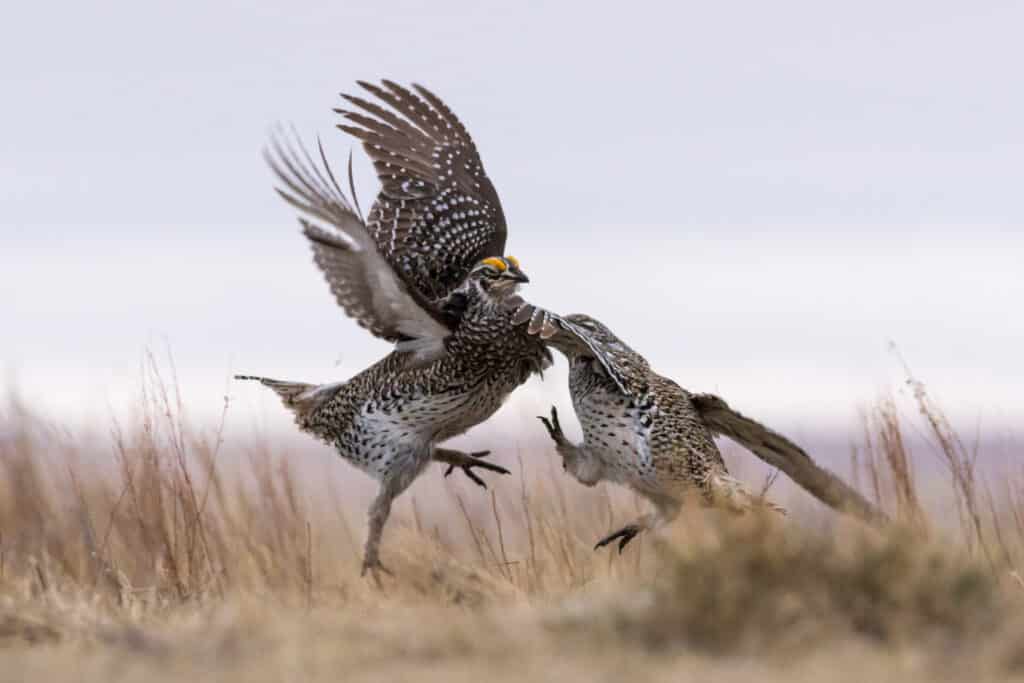
Montana offers upland hunters a remarkable abundance, with birds as varied as the landscapes they inhabit. In the wide prairie breaks and golden wheat country, sharp-tailed grouse and Hungarian partridge flush in fast, twisting coveys. Along the river bottoms and in the eastern plains, ring-necked pheasants slip from cattail sloughs and hedgerows, providing classic wing shooting. The rolling sagebrush of central and eastern Montana still holds sage grouse; a species as deeply tied to the state’s heritage as the open range itself. Higher in the mountains, hunters follow dogs through timbered slopes for ruffed and dusky grouse, while spruce grouse appear in the darker forests and chukar on rocky ridges.
Montana’s richness is not only a gift of geography but also of stewardship. Vast stretches of public land provide opportunity to hunters from every walk of life, while private ranches often hold the most carefully managed habitat in the state. Where native grasslands are protected, where crop rotations leave cover, and where grazing is balanced with restoration, bird populations continue to thrive. For landowners, that care is part of the legacy, ensuring that coveys rise each fall just as they have for generations.
Practical Advice for Landowners in Montana
In Montana, the best bird numbers are found where land is managed with both cattle and wildlife in mind. Leaving strips of uncut grain or cover crops along field edges provides shelter for pheasants and Hungarian partridge. Rotational grazing that allows native grasses to recover supports sharptails, while maintaining healthy sagebrush stands is essential for sage grouse. Protecting riparian corridors not only improves water quality for livestock but also creates year-round cover for birds. Landowners who work with state programs such as Montana Fish, Wildlife & Parks’ Upland Game Bird Enhancement Program can access cost-share opportunities for habitat projects that directly benefit both ranching operations and bird populations.
Wyoming: Sage Grouse in Big Country
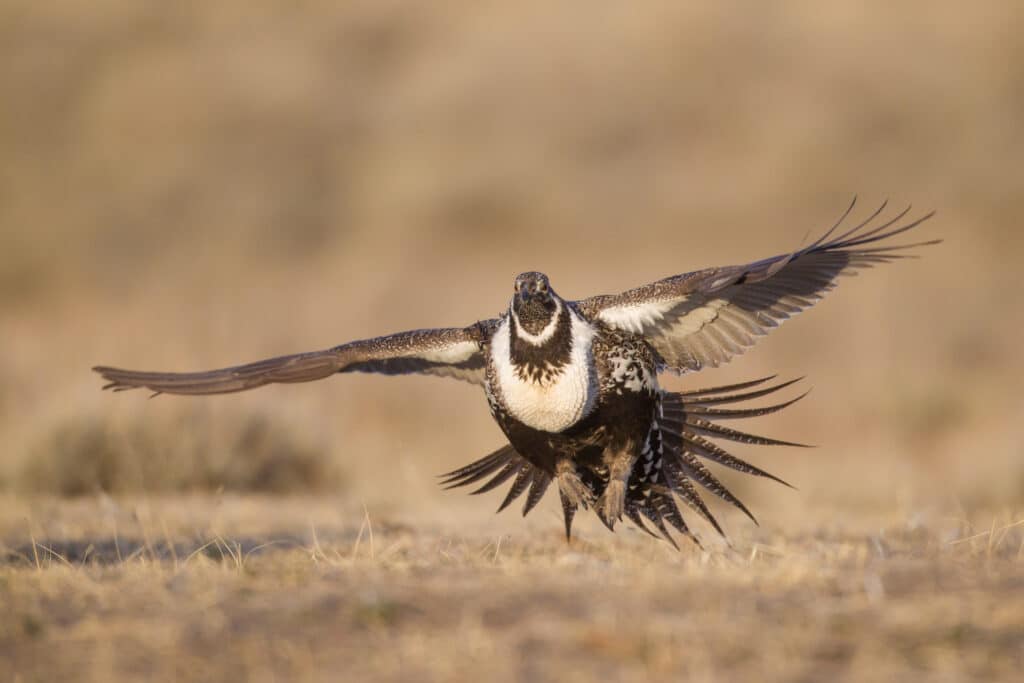
Wyoming’s upland story begins with the sage grouse. No other bird is more symbolic of the state’s wide basins and open horizons. Each fall, hunters walk the high desert, flushing coveys that have survived here since long before settlement and still gather on their spring leks as they have for centuries.
Yet Wyoming offers more than sagebrush country. In the prairies of the north and east, sharp-tailed grouse erupt from grasslands in sudden bursts. Hungarian partridge gather in tight coveys along stubble fields, testing the reflexes of even seasoned wingshooters. Pheasants are found in farming corridors and river bottoms. These birds add variety to the season, but the heart of Wyoming upland hunting remains the sweep of sage country under an endless sky.
Wyoming’s landscapes depend on balance. Millions of acres of public land provide opportunity, but the continuity of healthy sagebrush often rests with private ranches. Where management is thoughtful, grazing is timed to protect sage stands, grasslands remain intact, and winter cover is left undisturbed. In these places, bird populations continue to thrive.
Practical Advice for Landowners in Wyoming
Sage grouse require vast, connected tracts of sagebrush, making habitat continuity the most important management goal for landowners. Avoiding fragmentation through careful planning of fences, roads, and development is critical. For sharp-tailed grouse and Hungarian partridge, leaving grain stubble standing through winter provides essential food and cover. Grazing pressure should be minimized during the spring nesting season. Rotational systems that allow vegetation recovery benefit both cattle and birds. Landowners can also work with the Wyoming Game and Fish Department to access technical support and conservation incentives, particularly through sage-grouse core area programs and habitat partnerships.

Nebraska: Pheasants and Prairie Chickens in the Sandhills
Nebraska is a wing shooter’s paradise, a state where pheasants still flush from fencerows and cattail sloughs, and where the rolling Sandhills echo with the booming of prairie chickens in spring. In the vast rangelands, sharp-tailed grouse rise from mixed grasses, while the eastern plains are renowned for strong pheasant numbers that carry on a tradition stretching back more than a century. For many families, fall in Nebraska has always meant a walk along harvested cornfields behind a pair of eager dogs, waiting for the sudden rush of wings and the crack of a shotgun.
The state’s upland abundance is tied to a mosaic of farmland, shelterbelts, and native prairie. Crop edges and grassy field borders provide cover and winter food for pheasants, while the expansive Sandhills remain one of the last great strongholds for prairie grouse. Landowners here are not only cattle producers but also caretakers of some of the most important grassland ecosystems left in North America.
Practical Advice for Landowners in Nebraska
Strong pheasant and grouse numbers depend on a thoughtful blend of farmland and prairie management. Leaving strips of standing corn or grain stubble through the winter provides critical food and cover. Shelterbelts planted or maintained along fields offer protection from wind and predators. In the Sandhills, careful grazing practices that preserve plant diversity ensure sharp-tailed grouse and prairie chickens remain abundant. Landowners can also enroll acres in the Conservation Reserve Program (CRP) or partner with Nebraska Game and Parks habitat initiatives, which provide cost-sharing and technical support for upland habitat improvements. These practices not only strengthen ranch and farm operations but also guarantee that the whir of wings remains part of Nebraska’s autumn identity.

Idaho: Partridge, Chukar, and Rolling Hills
Idaho’s upland hunting is defined by its variety and challenge. In the rolling wheat country of the Palouse, Hungarian partridge burst from stubble fields in tight coveys, while pheasants slip from fence rows and field edges. Further south, the rocky canyons and high desert ridges test both dogs and hunters with the demanding pursuit of chukar, a bird prized as much for the effort it requires as for the reward of the flush. Higher in the mountains, ruffed and dusky grouse rise from thickets of aspen and pine, offering yet another style of wing shooting. Few states provide the opportunity to pursue so many birds across such distinct landscapes.
Idaho’s character lies in this diversity. From open farmland to canyon rim to alpine timber, each setting tells a different story of habitat and heritage. Hunters may find themselves walking golden fields in the morning, scrambling over basalt rimrock by midday, and following dogs through shaded forest by evening. For families and landowners, the uplands of Idaho represent both tradition and adventure, a reminder that the hunt here is as much about the land itself as the birds that rise from it.
Practical Advice for Landowners in Idaho
Maintaining bird populations in Idaho means working with the state’s varied terrain. For Hungarian partridge and pheasants, leaving unharvested grain strips or establishing field borders with cover provides essential food and nesting habitat. In chukar country, water developments such as guzzlers can help sustain coveys through the dry season and improve hunting success. For ruffed and dusky grouse, selective timber harvest that creates a patchwork of young and mature forest stands is critical for long-term habitat health. Landowners can also work with Idaho Fish and Game biologists for habitat planning and cost-share opportunities that support both ranch operations and upland hunting. By tailoring management to each landscape, landowners ensure that Idaho remains one of the most challenging and rewarding upland destinations in the West.
Utah: Chukar in Canyon Country
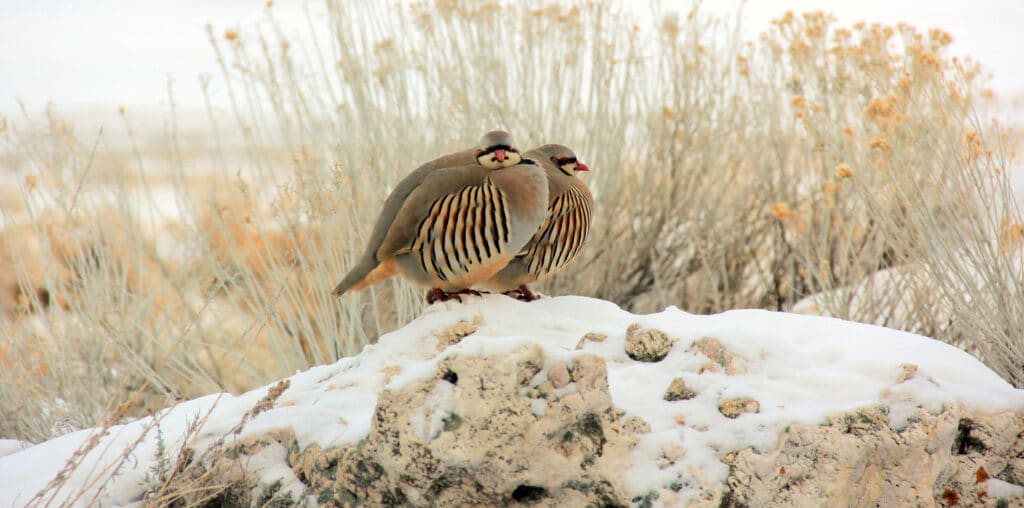
Utah’s upland hunting is defined by its rugged terrain and the pursuit of chukar. These hardy birds cling to steep, rocky slopes where basalt rims and desert canyons test both hunter and dog. To follow chukar in Utah is to accept the climb, the heat, and the difficulty of the hunt, with the reward of a covey rise all the sweeter for the effort it demands. For many wing shooters, Utah stands at the very top of the list for wild chukar, a bird as iconic to the state as sage grouse is to Wyoming.
Beyond the canyon rims, other birds add variety to the season. Hungarian partridge thrives in agricultural valleys and foothills, often found near alfalfa and wheat fields. In the mountain forests, ruffed and dusky grouse flush from aspen stands and timbered slopes, offering a more traditional upland experience. Pheasants persist in northern farming regions such as Cache Valley, although they are far less common than in neighboring states. Together these species round out a season that stretches from desert cliffs to alpine meadows.
Utah’s upland heritage rests on the adaptability of both birds and land. Ranchers and landowners who manage grazing on canyon edges, preserve native grasses, and protect water sources directly support chukar populations. In the mountains, selective timber management sustains grouse, while thoughtful farming practices benefit Huns and the limited pheasant populations. The state’s diversity reminds hunters and landowners alike that stewardship is as varied as the terrain itself.
Practical Advice for Landowners in Utah
Chukar are best supported by maintaining native shrubs and grasses on steep, rocky slopes and by protecting natural springs and seeps that provide water. Some landowners enhance habitat with guzzlers to help coveys persist through dry summers. For Hungarian partridge, field borders, small grain plots, and cover left through winter offer vital shelter and food. Grouse benefit from a mix of young and mature forest created by selective cutting or natural disturbance. Landowners can also work with Utah Division of Wildlife Resources programs that offer cost-sharing and technical guidance for upland habitat projects. With thoughtful management across desert, farm, and mountain ground, landowners can help ensure that Utah remains one of the premier destinations for challenging and rewarding upland hunting.
A Lifestyle Rooted in the Land
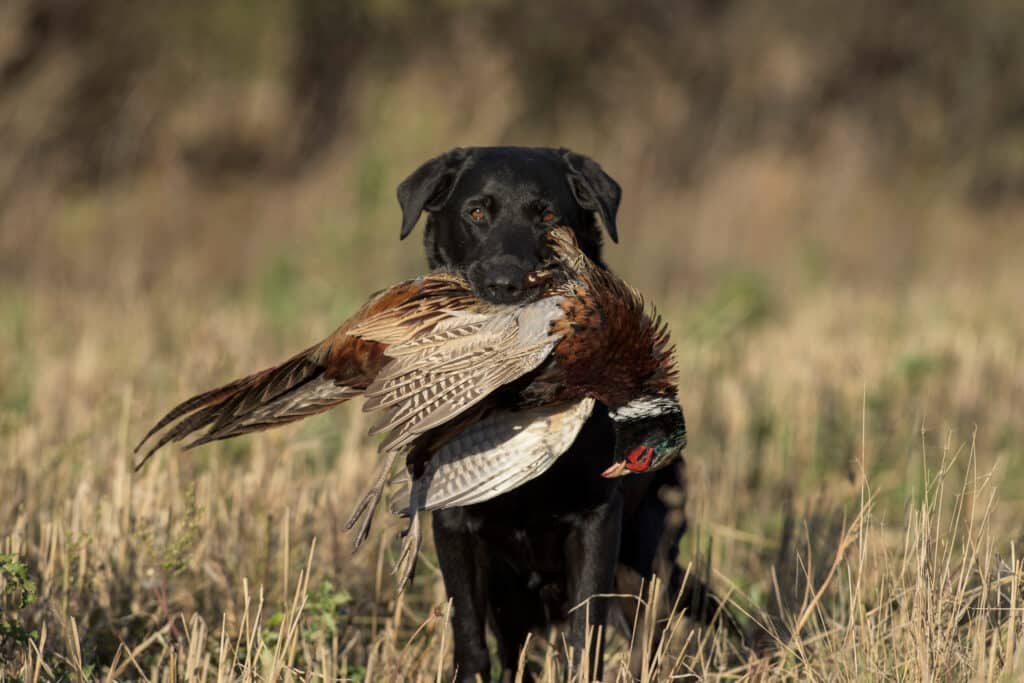
To own a ranch that supports wild birds is to experience hunting in its most personal form. There is no uncertainty about pressure from other hunters or access to good ground. It is simply you, your land, and the birds that rise because of the way you have cared for it. At sunrise the whistle of wings over your fields is a direct reflection of your stewardship. Each covey rise becomes part of your family’s memory, passed along with the bond between hunters, dogs, and land.
At Swan Land Company, we know that ranches are not only properties to be bought and sold. They are places where heritage, stewardship, and tradition converge. The ranches we represent carry forward the sporting culture of the American West, offering owners the chance to step into a way of life that endures across generations. This fall, as hunters take to the fields and prairies, those who walk their own ground will find that ownership is not simply about acreage. It is about carrying forward a legacy where land, wildlife, and family tradition remain inseparable.