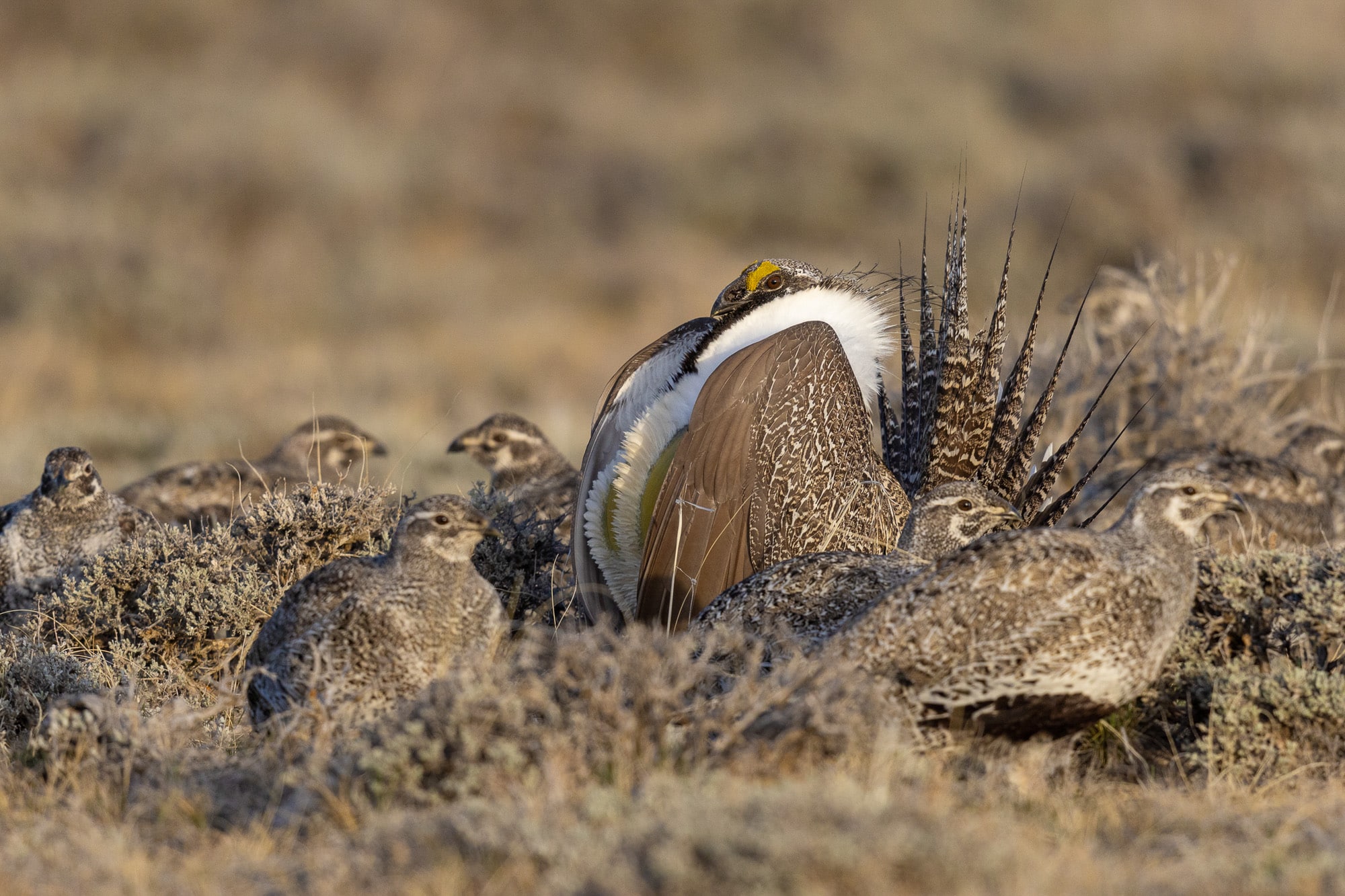
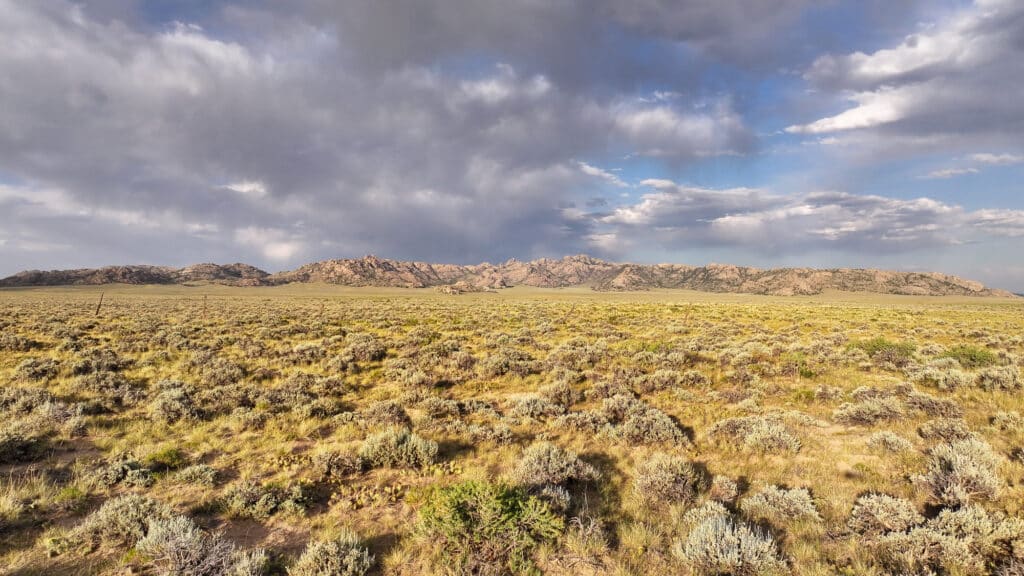
In the expansive sagebrush seas of central Wyoming, where rugged mountain ranges frame endless horizons and historic trails, Pathfinder Ranches stands as a monumental fusion of traditional ranching, cutting-edge wildlife conservation, and market-driven environmental stewardship. Encompassing a staggering 916,076 acres across Natrona, Carbon, Sweetwater, and Fremont counties, this property represents nearly 1% of Wyoming’s landmass. Listed for $79.5 million through Swan Land Company, Pathfinder Ranches isn’t merely the largest ranch for sale in Wyoming; it’s the epicenter of the nation’s premier sage grouse mitigation bank, a pioneering model in the growing sage grouse credit market that balances economic productivity with ecological resilience. Here, commercial cattle operations coexist with habitat protections that generate valuable mitigation credits, providing developers with a pathway to offset impacts while ensuring net benefits for wildlife. Pathfinder exemplifies how large-scale conservation banks can safeguard iconic Western species, such as the greater sage grouse, turning environmental challenges into opportunities.
The Plight of the Greater Sage Grouse: A Symbol of the Sagebrush Ecosystem
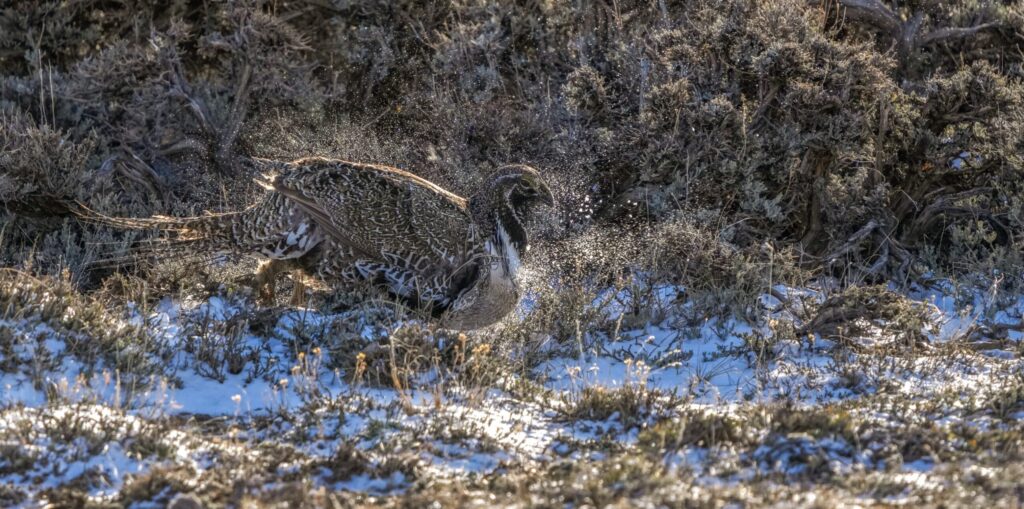
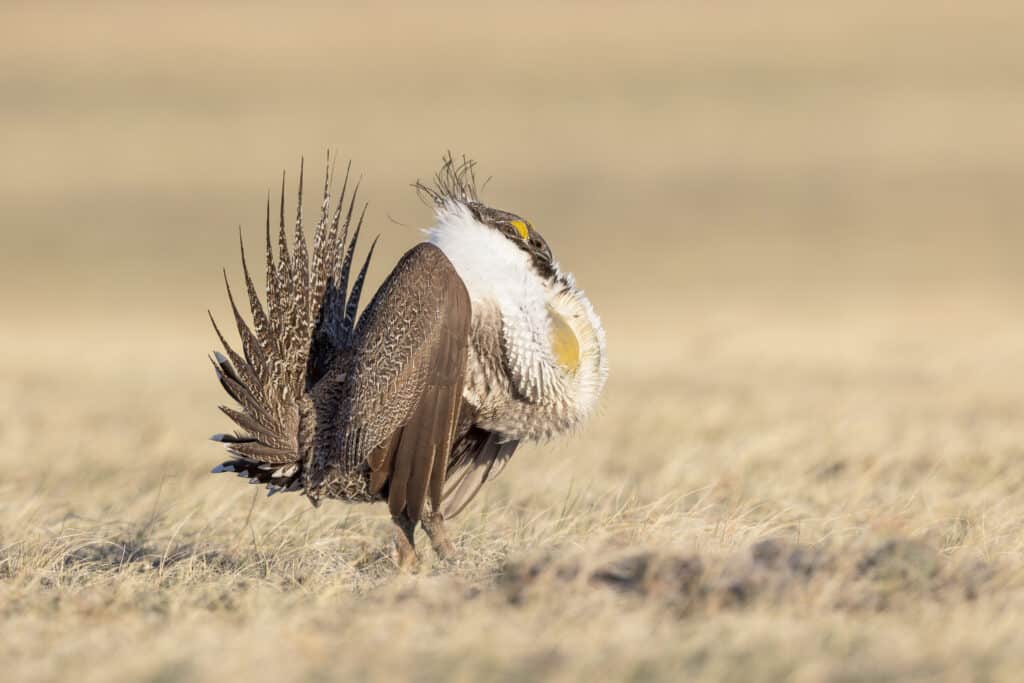
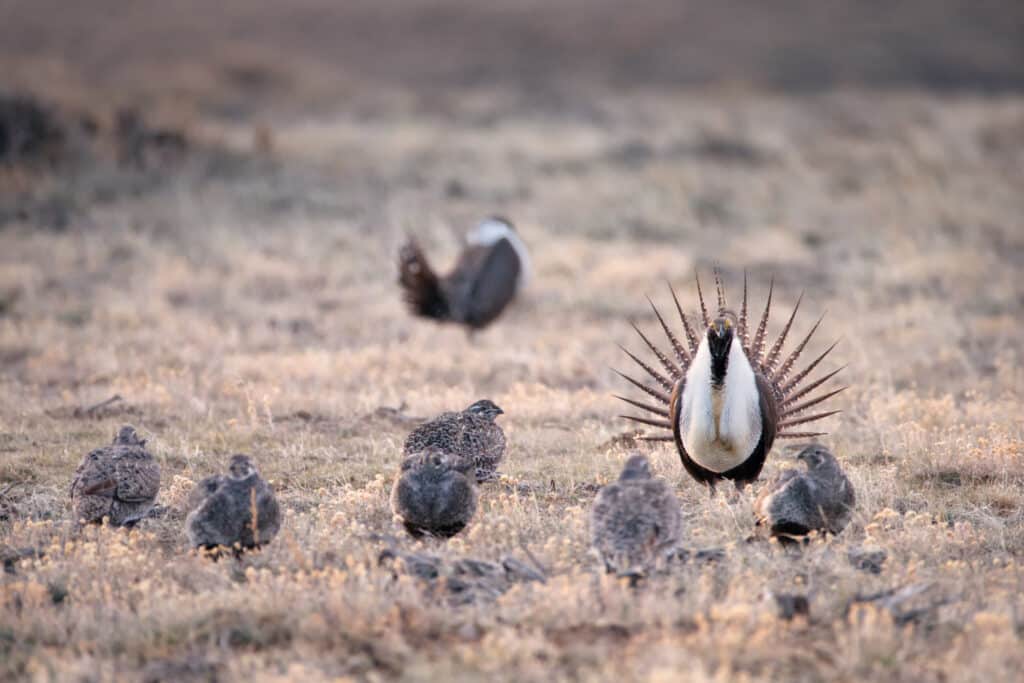
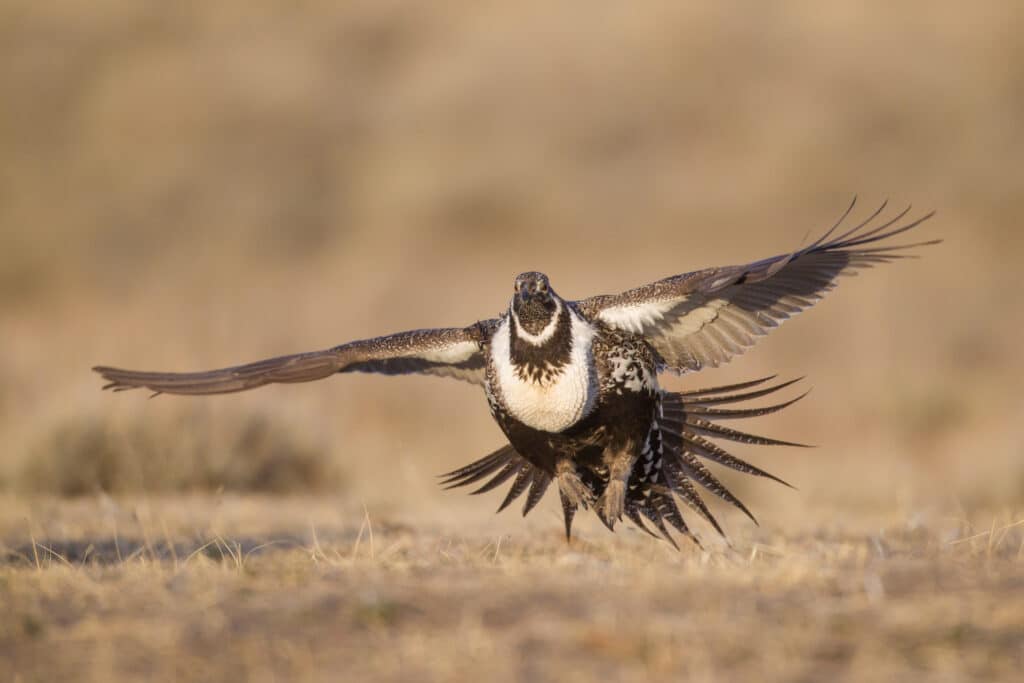
The greater sage grouse (Centrocercus urophasianus), often called the “sage chicken,” is an iconic bird of the American West, best known for its elaborate spring mating displays on communal leks, where males fan their tails and drum their chests in a timeless ritual across the open sagebrush plains. Native to the sagebrush ecosystems of eleven Western states—including Wyoming, Nevada, Colorado, Utah, Montana, Idaho, and Oregon—the species once numbered in the millions but has declined by as much as ninety percent. Habitat fragmentation from oil and gas development, wind energy projects, urban growth, agriculture, invasive cheatgrass, and wildfire has steadily eroded the vast, unbroken landscapes the bird requires—up to 230 square miles per population for nesting, brood-rearing, foraging, and wintering.
Beyond its cultural importance, which is deeply rooted in Native American tradition and Western heritage, the sage grouse serves as a vital umbrella species for the sagebrush ecosystem. This biome supports more than 350 other wildlife species, including mule deer, pronghorn antelope, elk, and golden eagles. The sage grouse’s decline is a warning signal for the health of the broader landscape—a region spanning 165 million acres that is disappearing at rates comparable to tropical rainforests. In response, federal and state agencies have implemented ambitious conservation measures, including the U.S. Department of the Interior’s landscape-scale management initiatives and Wyoming’s Sage Grouse Executive Order, which identifies and protects core habitat areas while requiring mitigation for development impacts. These proactive efforts aim to maintain stable populations and viable habitat without triggering a listing under the Endangered Species Act (ESA)—a designation that would impose significantly stricter land-use limitations across the West.
What Are Sage Grouse Conservation Banks? An Overview
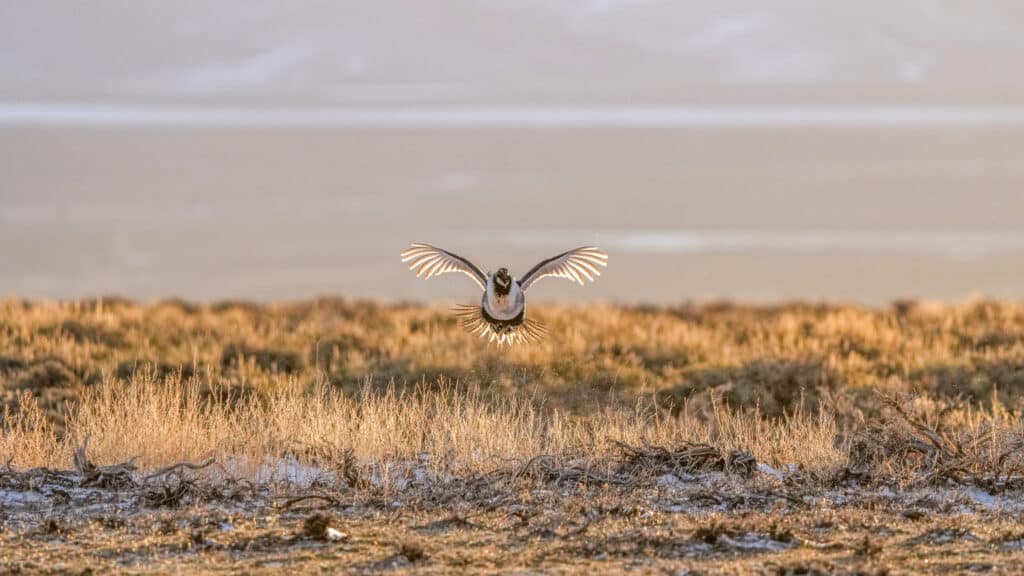
Sage grouse conservation banks are a market-based innovation in wildlife mitigation, modeled after established wetland banking programs but designed to protect habitat on a landscape scale. These banks are typically large, privately or publicly managed properties where landowners preserve, enhance, and permanently protect high-quality sagebrush habitat. In return, they generate credits that quantify the ecological value of those improvements.
Developers such as energy producers or infrastructure builders whose projects unavoidably impact sage grouse habitat elsewhere can purchase these credits to offset their disturbances. This system follows a regulatory hierarchy: avoid impacts where possible, minimize those that occur, and compensate for the remainder to achieve a measurable net conservation gain.
The process begins with landowners working in partnership with agencies such as the U.S. Fish and Wildlife Service (USFWS) to establish a Conservation Banking Agreement (CBA). This agreement includes detailed baseline habitat assessments, adaptive management plans that often integrate rotational grazing or prescribed burns, and permanent protections secured through conservation easements. Credits are calculated using habitat evaluation models that measure the quality and function of habitat across key life stages—nesting, brood-rearing, summer foraging, and winter survival—ensuring that ecological benefits are comprehensive and lasting.
Unlike project-by-project, on-site mitigation efforts that may fall short over time, conservation banks provide proactive, landscape-scale protection. For species like the Sage Grouse, this is far more effective in preserving the species. They streamline permitting for developers while funding endowments for ongoing monitoring, management, and habitat restoration. The benefits are widely shared. Landowners diversify income through credit sales, which can range from several thousand to hundreds of thousands of dollars per credit, depending on demand. Developers gain regulatory certainty and predictable costs, while wildlife receives long-term habitat protection that far exceeds the duration of typical mitigation efforts.
Challenges remain. The initial cost of scientific studies, appraisals, and agency approvals can exceed $1 million. Successful banks must balance habitat management with active ranch operations. While more than 130 conservation banks exist nationwide for various species, only a few sage grouse banks operate across the West. Among them, Pathfinder Ranches in Wyoming stands as one of the most significant and booming, setting the standard for this evolving conservation economy.
The Evolution of Sage Grouse Mitigation: From Policy to Practice
The concept of sage grouse conservation banking emerged in the early 2010s, as concern grew over the bird’s potential listing under the Endangered Species Act. Wyoming led with its 2008 Core Area Strategy, requiring compensatory mitigation in prime sage grouse habitat to conserve core breeding areas and prevent federal intervention. A breakthrough came in 2015, when the USFWS approved the nation’s first dedicated sage grouse conservation bank, establishing a framework for market-based habitat protection. The same year, the Bureau of Land Management incorporated mitigation and net-benefit standards into 70 regional land-use plans across the West, aligning state and federal policy. Together, these efforts mark a shift from regulation to collaboration, aligning conservation with working lands and helping avert the economic consequences of an ESA listing.
Spotlight on Pathfinder Ranches: A Pinnacle of Scale and Innovation
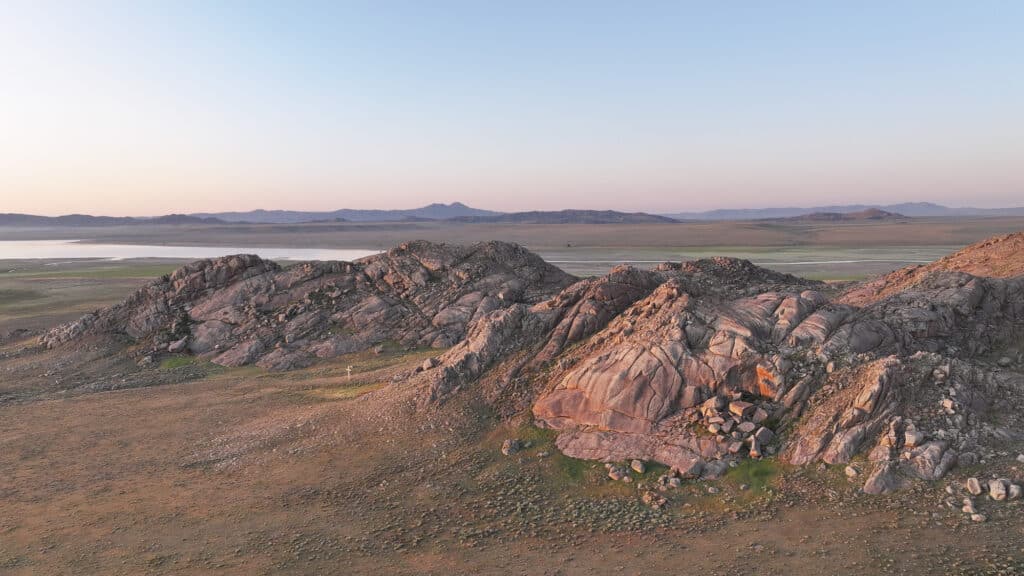
Pathfinder Ranches embody the evolution of market-based conservation as one of the largest sage grouse habitat conservation banks in the United States. Approved by the U.S. Fish and Wildlife Service in 2015, the project represents a benchmark in proactive, landscape-scale stewardship. As of a 2019 presentation to the Wyoming Legislature’s Joint Minerals, Business & Economic Development Interim Committee, Pathfinder had generated approximately 122,000 mitigation credits since its establishment, with a portion sold and the remainder available for future transactions. The property was assembled from several historic ranches and encompasses over 20 miles of the Sweetwater River, sections of the North Platte River, and notable landmarks such as Independence Rock, located along the Oregon, Mormon, California, and Pony Express Trails.
Operations balance production and protection. The ranch supports thousands of cattle and horses across four operating units and is sustained by senior water rights that date to before 1904. Grazing management is designed to improve soil health and forage quality while maintaining robust sage grouse habitat, demonstrating that productive ranching and wildlife stewardship can coexist.
Conservation improvements include wildlife-friendly fencing, lek monitoring, riparian restoration, and invasive-species control, funded through credit sales and long-term endowments. Pathfinder Ranches also partner with the Wyoming Stock Growers Land Trust to secure perpetual open space through conservation easements, ensuring that stewardship values endure under future ownership. The result is a working landscape that integrates agriculture and conservation on a scale unmatched in the American West.
 |
 |
The Sage Grouse Credit Market: Driving Demand and Sustainability
Pathfinder Ranches anchors Wyoming’s developing sage grouse credit market, where ongoing energy expansion in oil, gas, and renewable projects continue to drive demand for habitat offsets in designated core areas. Under Wyoming’s compensatory mitigation framework, developers must first avoid and minimize impacts, then offset any remaining disturbance by purchasing credits that deliver a net conservation gain. Pathfinder Ranches credits, approved under the USFWS framework, can also be used to obtain relief from seasonal restrictions, allowing year-round access when equivalent habitat mitigation is provided. The program also contributes revenue to Wyoming’s public school trust lands and supports ongoing conservation management across more than 600,000 acres of habitat.
According to publicly available business reporting, companies such as True Oil, Jonah Energy, Pacificorp, Union Telephone Company and more, have purchased Pathfinder Ranches credits to expedite permitting and maintain operational access in Converse County. Public entities have also participated; Converse County purchased credits from the Pathfinder Ranches bank in 2024 to meet local mitigation requirements. Proceeds from these transactions are reinvested in long-term habitat monitoring, restoration, and management, ensuring that development results in durable conservation gains.
By transforming regulatory compliance into measurable habitat value, Pathfinder Ranches has helped establish a functioning marketplace where wildlife conservation and resource development coexist. This model demonstrates that stewardship and economic growth can advance together—an increasingly vital balance across the modern West.
 |
 |
Innovation and the New West
At a time when conservation and commerce increasingly share the same frontier, Pathfinder Ranches stands as proof that working lands can deliver both ecological and economic returns. Its scale, history, and integration of habitat crediting place it at the forefront of a new Western economy—one built on stewardship, data, and permanence. Pathfinder Ranches demonstrates that the same forces shaping the modern West—resource demand, policy innovation, and private investment—can be harnessed to restore and sustain its landscapes.
For investors, landowners, and institutions seeking to define that future, Pathfinder Ranches represent more than acreage. It is an operating model for how the next generation of Western ranches will create measurable environmental and financial value while preserving the integrity of the land itself.
From the Cowboy State Daily interview:
“The size is just legendary … I’ve tried to explain it, and just, the realization didn’t hit me until one day I was standing on one mountain range looking across to the other, and I saw that it was all Pathfinder in between.” Scott Williams