Chronic wasting disease (CWD) is one of the most concerning wildlife health issues facing North America today. It belongs to a family of diseases called transmissible spongiform encephalopathies, which also includes mad cow disease in cattle and Creutzfeldt-Jakob disease in humans. These diseases are caused by misfolded proteins called prions that trigger other normal proteins to misfold, creating a cascading effect that ultimately destroys brain tissue.

The progression of CWD in affected animals is alarming. In the early stages, infected deer or elk may show no outward signs at all, yet they’re already contagious and spreading the disease. As prions accumulate and brain damage worsens, animals begin to display the characteristic symptoms. They become emaciated despite having access to food, their coats become rough and unkempt, and they develop a blank, listless stare. The loss of coordination becomes pronounced, with animals stumbling, standing with their heads lowered, or walking in repetitive patterns. Excessive drooling, increased drinking, and urination are common. Perhaps most tellingly, infected animals lose their natural wariness of humans and predators, making them easy to spot in the wild.
The mechanism of transmission makes CWD particularly difficult to control. Infected animals shed prions through saliva, urine, feces, and other bodily fluids. These prions can persist in the environment for years, perhaps even decades, binding to soil particles and remaining infectious. This means that even after removing infected animals from an area, the disease can continue to spread as healthy animals encounter contaminated soil, water, or plants. Direct animal-to-animal contact also spreads the disease, as does contact with the carcasses of infected animals.

The historical spread of CWD tells a troubling story. When it was first recognized in captive mule deer in Colorado in 1967, it was considered a curious but localized problem. Through the 1970s and 1980s, it remained confined to a small area of Colorado and Wyoming. However, the movement of captive cervids for farming and hunting preserves likely accelerated its spread. By the 1990s, cases began appearing in other states, and the pace of geographic expansion has only increased since then.
Today, the disease has established itself across much of the Rocky Mountain region and the upper Midwest and is pushing into the East and South. In some areas where the disease has been present longest, particularly in parts of Colorado and Wyoming, infection rates are alarmingly high. Some local deer populations show prevalence rates of thirty to fifty percent or even higher. At these levels, CWD can begin affecting population dynamics, potentially leading to population decline.
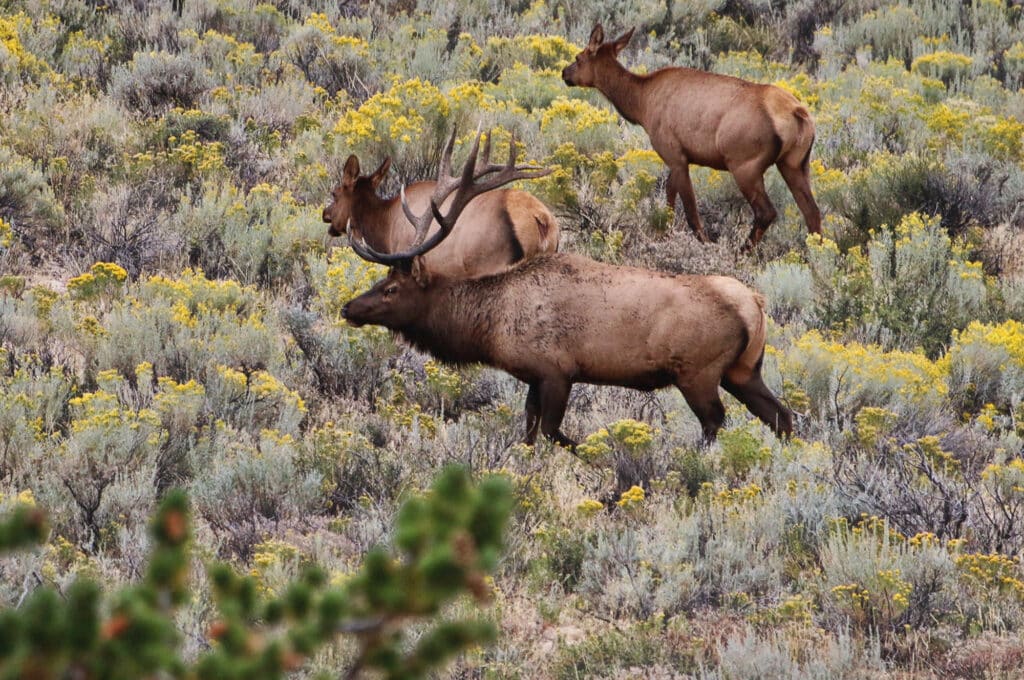
The western states remain the epicenter of the epidemic for several reasons. The disease has simply been there longer, allowing it more time to build up in the environment and spread through populations. The concentration of elk and deer populations in certain valleys and migration corridors in the Rocky Mountain states may also facilitate transmission. Additionally, some areas practice supplemental feeding or have high-density populations around agricultural areas, which can increase disease transmission rates.
Wildlife management agencies have implemented various strategies to combat CWD, though with limited success. Many states have established surveillance programs that test hunter-harvested animals to track the disease’s spread and prevalence. Some have implemented more aggressive management strategies, including culling operations aimed at reducing deer densities and slowing transmission. Restrictions on transporting whole carcasses across state lines aim to prevent the introduction of the disease into new areas. Bans on baiting and feeding deer in affected areas try to reduce the congregation of animals that can facilitate the spread.

Despite these efforts, CWD continues to expand its range. Part of the challenge is that by the time the disease is detected in a new area, it has often already been present for years, silently spreading through the population. The environmental persistence of prions means that even if every infected animal were somehow removed, the landscape itself would remain contaminated.
The question of whether CWD can jump to humans remains unresolved and is a source of significant concern. So far, there’s no evidence that it has infected humans, and studies suggest there’s a substantial “species barrier” that makes transmission unlikely. However, prion diseases have crossed species barriers before, as mad cow disease demonstrated when it infected humans who consumed contaminated beef. The Centers for Disease Control and Prevention recommends that hunters in affected areas have their animals tested before consuming the meat and avoid eating meat from animals that test positive.
Looking forward, CWD presents a long-term challenge that likely cannot be eradicated with current tools. Instead, wildlife managers are increasingly focused on slowing its spread, managing it in areas where it’s established, and preventing its introduction to new populations, particularly those on islands or in isolated regions that remain disease-free. Research continues into potential vaccines, treatments, or environmental decontamination methods, but practical solutions remain elusive. The disease poses a fundamental threat to the ecological and economic value of North America’s cervid populations, affecting everything from ecosystem dynamics to culturally and economically important hunting traditions across much of the continent.
Swan Land Company your ranch land experts!