
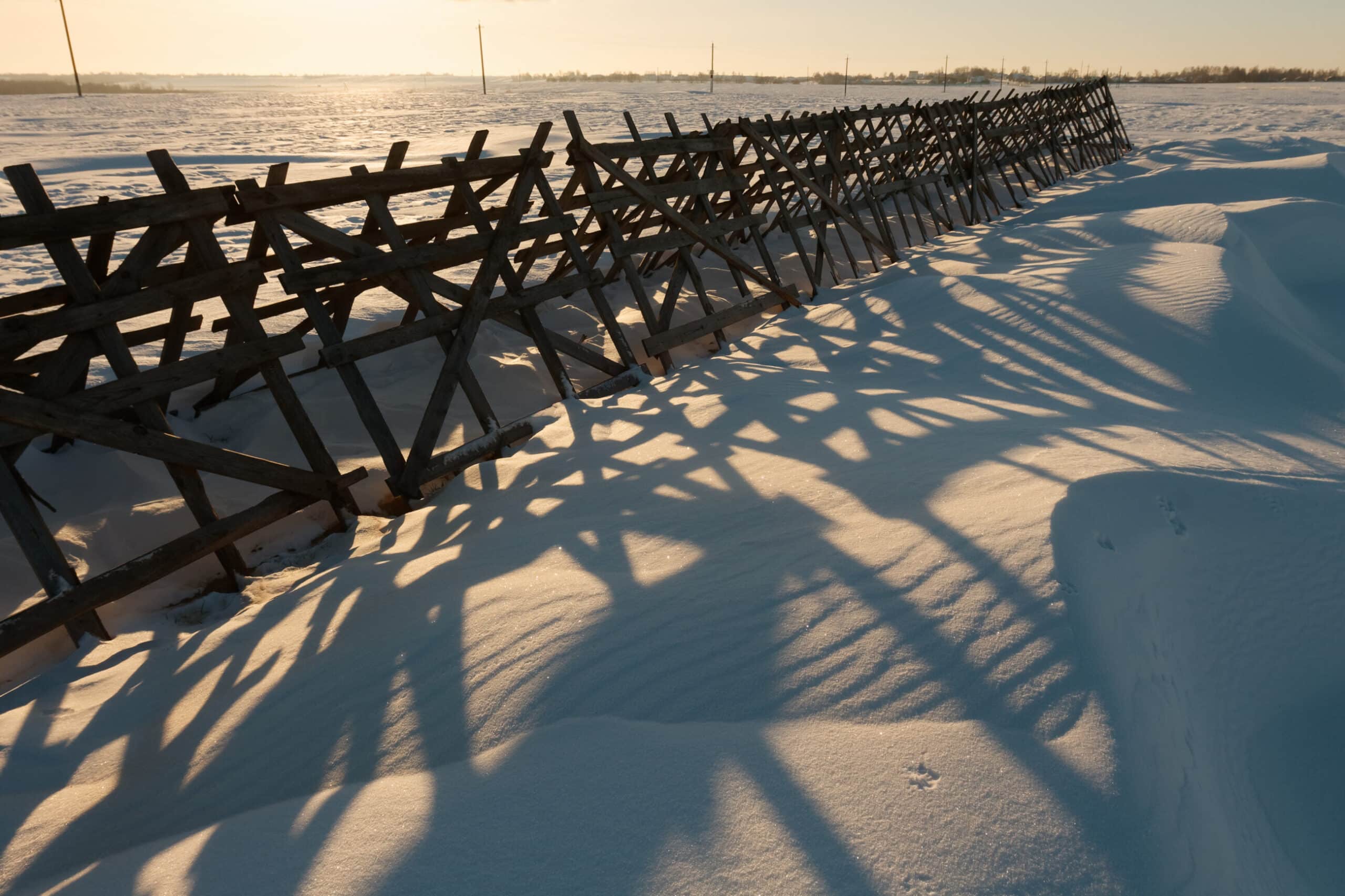
Snow fencing in the western United States serves two important purposes: controlling drifting snow and retaining moisture in soils. In regions where strong winds move snow across open landscapes, fences are placed perpendicular to prevailing winds so that snow accumulates in predictable areas rather than on roads, railways, or farmsteads. This reduces accidents, road closures, and snow-removal costs. At the same time, the captured snow becomes a valuable water source when it melts, infiltrating the soil and supporting crops and rangeland vegetation in semi-arid climates where water is scarce.
Western states like Wyoming, Colorado, and Montana have adopted snow fencing programs that highlight both safety and agricultural benefits. Wyoming’s Living Snow Fence Program, for example, partners with landowners and agencies to plant windbreaks along highways, saving millions in snow removal costs while improving travel safety. Farmers and ranchers across the region also use snow fencing to increase soil moisture for dryland crops and grazing lands, which is especially valuable in areas prone to drought.
The broader impact of snow fencing goes beyond snow control. It supports local economies by lowering highway maintenance costs, improves agricultural productivity through better soil moisture, and strengthens environmental resilience by reducing erosion and enhancing biodiversity. In short, snow fencing in the western states is a practical and sustainable tool that combines road safety with water conservation, making it a vital strategy for communities that depend on winter snowpack for survival.
Snow fencing for drift control and moisture retention
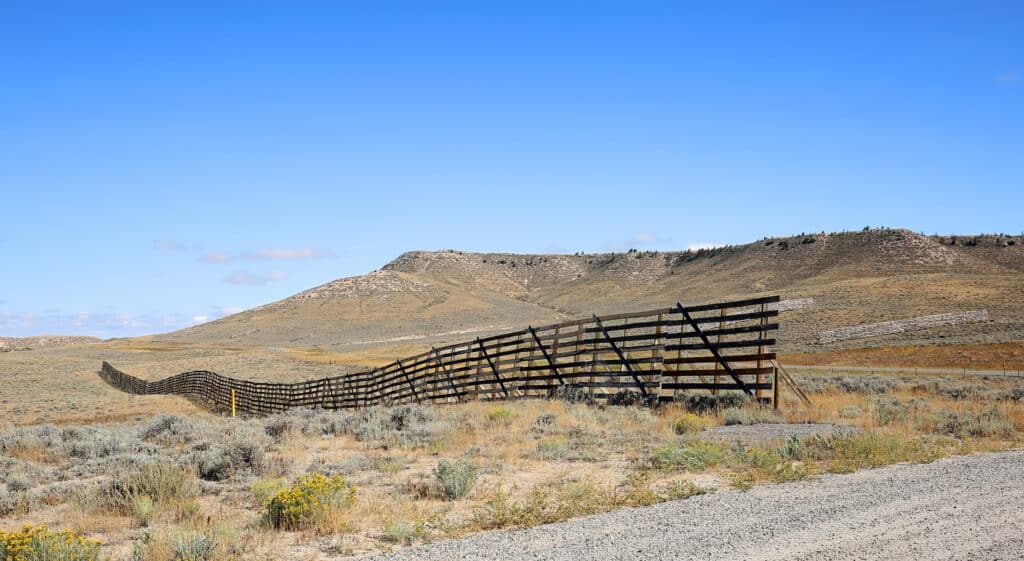
Snow fencing serves dual critical purposes on western ranches: protecting livestock operations from dangerous drifts while capturing precious moisture for spring and summer forage production. In the water-scarce western landscape, snow fencing is an essential ranch management tool.
Primary Ranch Benefits
Livestock Protection:
Snow fences reduce drifting on roadways and driveways, provide a windbreak for livestock, and promote moisture retention and healthy soil. Windbreaks constructed into a V formation provide downwind protection five times the height of the fence, while straight, porous windbreaks provide protection eight to ten times the fence height.
Critical Moisture Capture:
In Wyoming’s high-desert climate, the extra moisture captured by snow fences can significantly affect the growth of feed grasses and trees. Snow fences trap snow so that when it melts, moisture seeps into the ground slowly, helping create a deeper moisture bank and lusher vegetation. This is particularly valuable given that western livestock producers typically operate in areas with growing seasons of less than 120 days and limited precipitation patterns.
Spring Forage Production:
Snow plays a significant role in increasing soil moisture levels, and plant residue acts like a sponge, absorbing moisture and maintaining those stores far longer than bare soil, where moisture quickly evaporates. Areas downwind of snow drifts enjoy thicker, lusher vegetation during the growing season, directly translating into improved carrying capacity and reduced supplemental feeding costs.
Strategic Placement on Ranches
For ranch applications, placement requires careful consideration of multiple factors.
Water Development Areas:
Ranchers use snow fences to create drifts in basins for a ready spring water supply. Strategic placement near stock tanks, ponds, or seasonal water sources maximizes spring recharge.
Pasture and Hay Ground:
Fences positioned to drift snow onto pastures or hay meadows provide slow-release irrigation throughout spring, extending the growing season and improving forage quality and quantity.
Feed and Calving Areas:
Ranchers install windbreak panels at center pens where multiple pastures meet and where calving occurs, giving calves a place to get out of the wind. Proper placement prevents snow from burying feed bunks and water tanks while still providing wind protection.
Design Considerations for Ranches
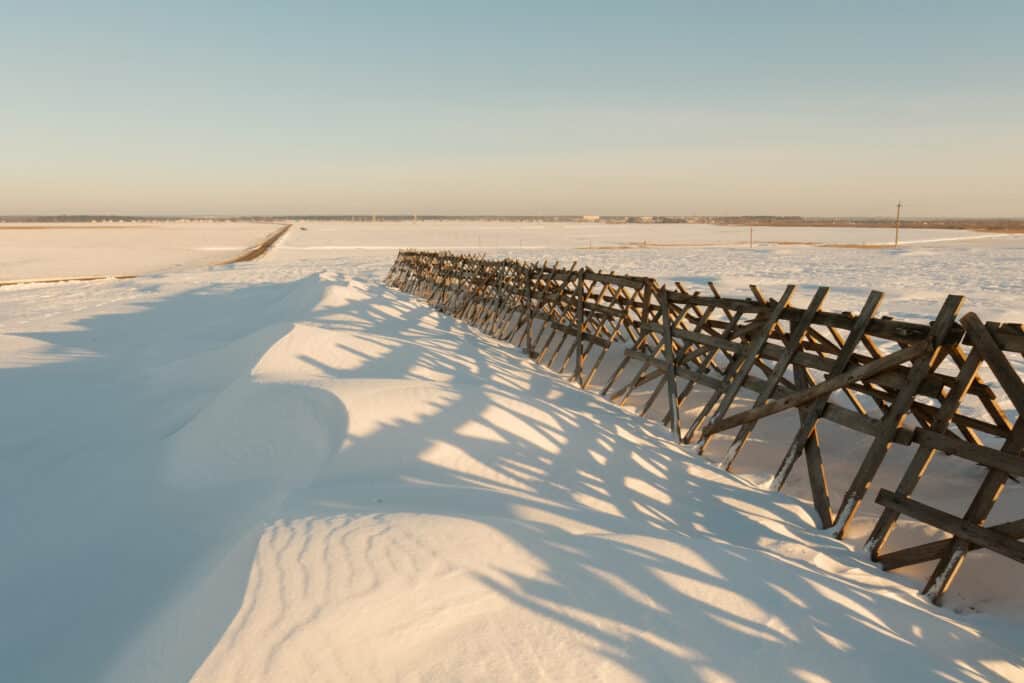
Fence Types:
- Structural fences: Traditional wood slat or synthetic rail fences, typically 50% porous for optimal performance
- Living snow fences: Trees, shrubs, and grasses that provide long-term solutions with multiple benefits
- Temporary solutions: Round bales stacked strategically, standing corn rows, or portable panels
Height and Distance:
The same principles apply: place fences at 35 times their height from protected areas, with drift zones extending to 34 times fence height downwind. Snow fences accumulate snow for about five times their height, with drifts reaching 1.2 times the fence height.
Porosity:
Ranch-Specific Management
Winter Grazing Integration:
Snow fences can be integrated into winter grazing plans, with stockpiled forage in protected areas providing accessible feed during storms while the fences capture moisture for spring recovery.
Feedlot Protection:
Windbreaks for livestock in open lots improve feed efficiency for feeder animals and reduce death loss among young animals, with Canadian tests showing a 50% reduction in weight-gain losses when cattle have proper wind protection.
Preventing Livestock Burial:
Young and smaller animals are at greater risk of becoming buried by snow, making properly positioned fences that control rather than create massive drifts near livestock areas essential.
Economic Value
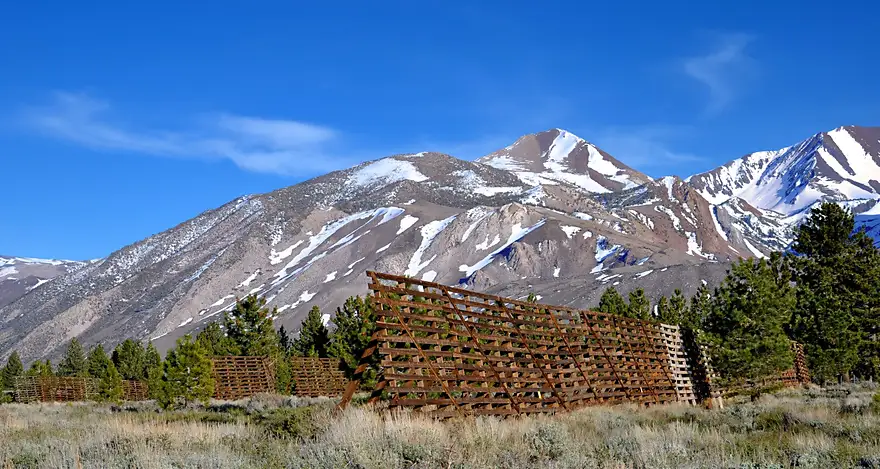
The dual benefits make snow fencing particularly cost-effective for ranches. Not only do they reduce winter feed costs and protect livestock, but the moisture-capture benefit also improves summer carrying capacity. In drought-prone western conditions, where soil moisture can be quickly depleted and spring green-up severely compromised, the moisture-banking function of snow fences becomes critical for ranch viability.
Many western states offer cost-share programs through Conservation Districts and NRCS for living snow fence installation, recognizing their value for both agricultural productivity and conservation goals.