

Selling western land is not like selling other real estate. The buyers are fewer, the stakes are higher, and the gap between a good outcome and a great one almost always comes down to strategy rather than the property itself.
What separates a sale that captures full value from one that leaves money on the table is rarely the land itself. It is how that land is presented, documented, and put before the people most likely to pay what it is truly worth. In the western market, this requires a level of sophistication that goes well beyond a public listing. It requires relationships, professional-grade presentation, and the ability to create competitive tension that shifts negotiating power to the seller’s side.
Marketing that Goes Well Beyond the MLS
Many landowners assume that listing a property on the MLS and a few land-focused platforms is sufficient to reach serious buyers. In the Western land market, that assumption is expensive. The buyers most likely to pay top dollar for a significant western property are often not browsing public listings at all. They are connected to brokers, belong to buyer networks, attend industry events, and respond to direct outreach from trusted professionals. Reaching them requires relationships, not just listings.
This is not to say that public platforms are irrelevant. They play a role in creating awareness, validating market presence, and occasionally surfacing buyers who are actively searching. But the buyers who generate competitive offers, drive a sale above the asking price rather than below it, are rarely found through a search engine. They are found through a broker’s Rolodex, a professional network cultivated over years, and a reputation that signals to serious buyers that when a property of this caliber comes to market, it is worth paying attention to.
Visual Presentation: The First Impression That Wins or Loses the Showing
 |
 |
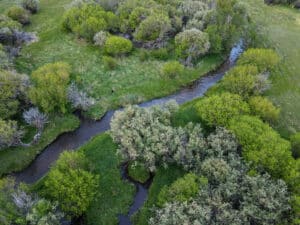 |
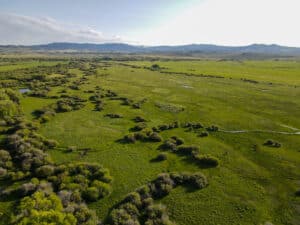
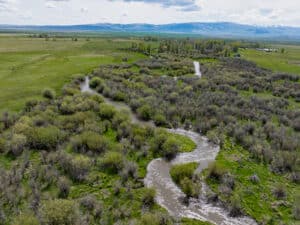
Drone footage is particularly powerful in the western context, where the scale and character of a property cannot be conveyed in ground-level photographs. Aerial video that captures a river corridor winding through a valley, or the boundary of a ranch against a backdrop of public land, communicates something that words and static images cannot — and it does so for the buyers who are evaluating dozens of properties simultaneously and need a reason to look more closely at one over another.
The quality of this aerial footage matters enormously. A shaky, poorly edited drone video with no narrative arc will not help a property stand out; it may harm it by signaling that the seller did not invest in a professional presentation. The best aerial work is cinematic in quality and it tells the story of the property in motion, capturing the relationship between water, terrain, timber, and open ground in a way that creates genuine desire in the viewer before they have ever set foot on the land.
Ground-level photography must be equally deliberate. Images should be shot in optimal seasonal and lighting conditions and not whatever happens to be convenient on the day the listing is prepared. A river photographed in late summer low-water conditions tells a very different story than the same water feature captured in spring runoff. Livestock facilities photographed in poor weather communicate neglect, even when the operation is well-run. Investing in professional photography, planned around the property’s most compelling moments, pays far more than its cost.
Maps and Documentation: The Foundation of Buyer Confidence
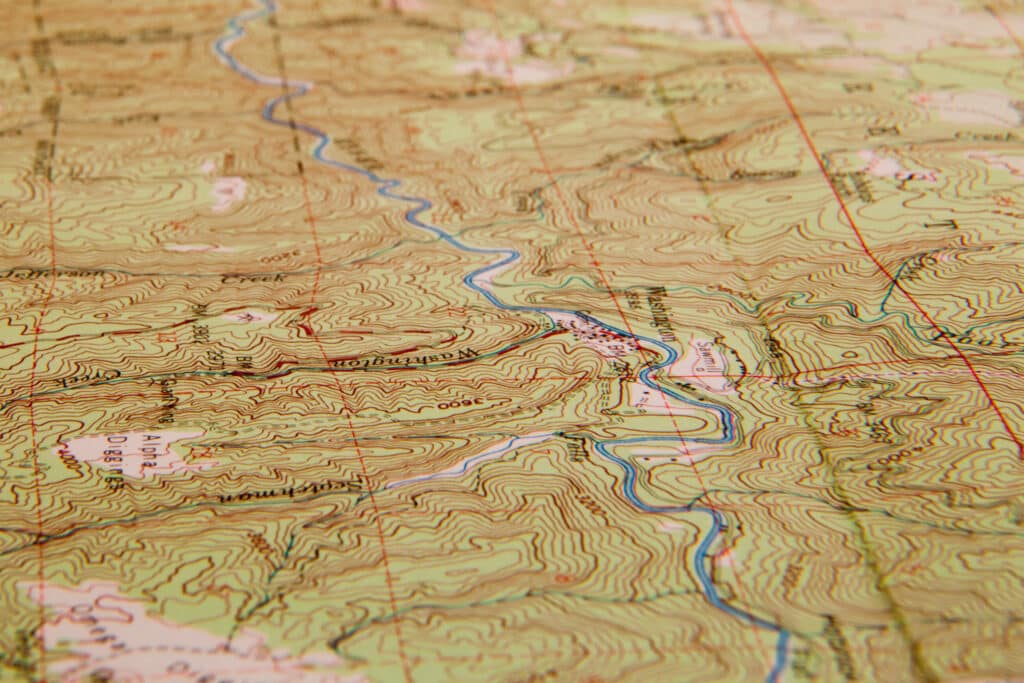
Professional mapping is equally important. Boundary maps, topographic overlays, water feature documentation, access road identification, and proximity to key landmarks all contribute to a buyer’s ability to evaluate a property without visiting in person. In a market where buyers routinely consider properties across multiple states, the quality of that documentation frequently determines whether a prospect takes the next step or moves on to the next listing.
For a buyer evaluating a western ranch from across the country, a well-constructed property map is not just a convenience, it is the foundation. They need to understand where the property sits in relation to public land access, neighboring operations, and water sources. They need to see how the seasonal road network functions under different conditions and understand the relationship among the deeded acres, any leased ground, and the ranch’s operational footprint. A real estate professional who presents this information clearly, in a format that does not require an expert to interpret, removes friction from the buyer’s evaluation process and accelerates the path to a serious conversation.
Water documentation deserves particular attention in the western context, where water rights are often more valuable than the land itself and where the complexity of adjudicated rights can either create or destroy buyer confidence. A seller who can present a clear summary of their water rights portfolio, senior versus junior rights, the nature and priority of each right, the history of beneficial use, and any relevant court decrees, is far better positioned than one who leaves a buyer to sort through that complexity during due diligence. Buyers who encounter opacity around water rights do not typically push through it; they walk away from the deal.
Digital Reach: Meeting Out-of-State Buyers Where They Are

For the growing segment of western land buyers coming from out of state, digital reach is not just helpful; it is essential. Comprehensive digital property portfolios, including high-quality images, virtual tours, and detailed land surveys, help distant buyers feel more informed and confident in their investment decisions.
Virtual tours have become an expectation, not a novelty. A buyer in a different geographic location, evaluating a western ranch, wants to understand the property before booking a flight. Sellers who invest in a compelling virtual presentation reduce the friction that keeps qualified out-of-state buyers from engaging, and they attract prospects who are already meaningfully committed by the time they arrive for an in-person visit. The difference between a prospect who arrives for a showing with no prior context and one who has spent several hours with a virtual tour is substantial. The latter is already emotionally invested, already working through their ownership vision, and far more likely to make an offer.
Digital distribution strategy matters as well. The most effective land professionals maintain email networks of active buyers or former clients who have expressed interest in specific property types, and financial advisors whose clients have western land acquisition on their agenda. A targeted email to five hundred qualified contacts who have indicated interest in properties of a specific type, size, and region will outperform a public listing reaching ten thousand unqualified browsers. The goal is to reach the specific people who are most likely to pay the most for what this property offers.
The Scarcity Advantage and the Power of Private Listings

The scarcity dynamic that characterizes the top tier of the western market also creates its own form of urgency that an experienced professional knows how to leverage. Trophy ranches and properties that have not changed hands in decades are coming to market as families make succession-planning decisions. When a property of genuine rarity becomes available, that scarcity is itself a marketing asset but only if the professional managing the sale knows how to communicate it to the right audience at the right moment.
A skilled broker or agent can use that scarcity to a seller’s advantage by creating competitive interest among multiple qualified buyers rather than negotiating with a single prospect who holds all the leverage. That dynamic alone can mean the difference between a sale at the asking price and a sale significantly above it. When two or more genuinely qualified buyers believe they may lose access to a property they have identified as exactly right for their needs, the negotiating environment shifts fundamentally in the seller’s favor.
Private listings are also powerful tools that only well-connected real estate professionals can deploy effectively. Some of the most significant western land transactions never appear on any public platform. They are handled entirely through a broker’s personal network by matching a motivated seller with a buyer who has been waiting for exactly that type of property. For sellers who value privacy or whose property is of a caliber that warrants exclusive treatment, this approach can deliver results that no public listing ever would. It also allows a seller to test buyer interest and pricing assumptions before committing to a public marketing campaign, preserving flexibility and protecting the property’s market position if an adjustment is needed.
Conclusion
Selling a significant western property is the culmination of a legacy or investment that may have taken decades to build. The buyers capable of paying the most for the right property are also the most sophisticated and the most selective — they will recognize the difference between a listing assembled quickly and one prepared with genuine expertise and care.
For sellers who want to be certain they are not leaving value on the table, the first and most important decision is choosing real estate representation that understands that distinction and has the relationships and track record to act on it.
Link to part one: Attracting and Identifying the Right Buyers for Western Land- Part One