Part two of our series with Kendall Van Dyke on conservation easements, drawn from a recent seminar talk. Read Part 1 for the state of private land conservation in Montana today.
You’ve said no two easements are created equal.
What are the different eras, and why does it matter to someone buying or selling a property?
 |
 |
 |
There are really three generations of these, and knowing which one you’re dealing with tells you a lot. The oldest are what I’d call the pre-2000s easements — almost always a landowner who had a tax event and wanted the charitable deduction, or in some cases just wanted to do what they felt was the right thing with the land. These older easements tend to show up on sizable ranches, sometimes with multiple divisions, and they often include what we call floating building envelopes. In the go-go days, a landowner could say, “we want seven houses somewhere on these ten thousand acres,” without pinning down exactly where. Eventually the IRS caught on because technically, someone could put a mansion on the highest hill in the county and land trusts started requiring grantor approval on where those houses actually got sited.
Honestly, as a land trust practitioner, I don’t love that solution either, because it sets up an adversarial relationship with the landowner down the road. Where we’ve landed instead is defining building envelopes up front, with some flexibility on size for larger properties where we don’t yet know where power or sewer might run. One thing I’ve come around on over the years is leaving a defined ranch headquarters out of the easement entirely if there’s a clear headquarters area, I don’t want an owner having to ask permission to build a barn or add a mother-in-law apartment. Let the ranch be a ranch.
What about roads and access, does that vary a lot between land trusts?
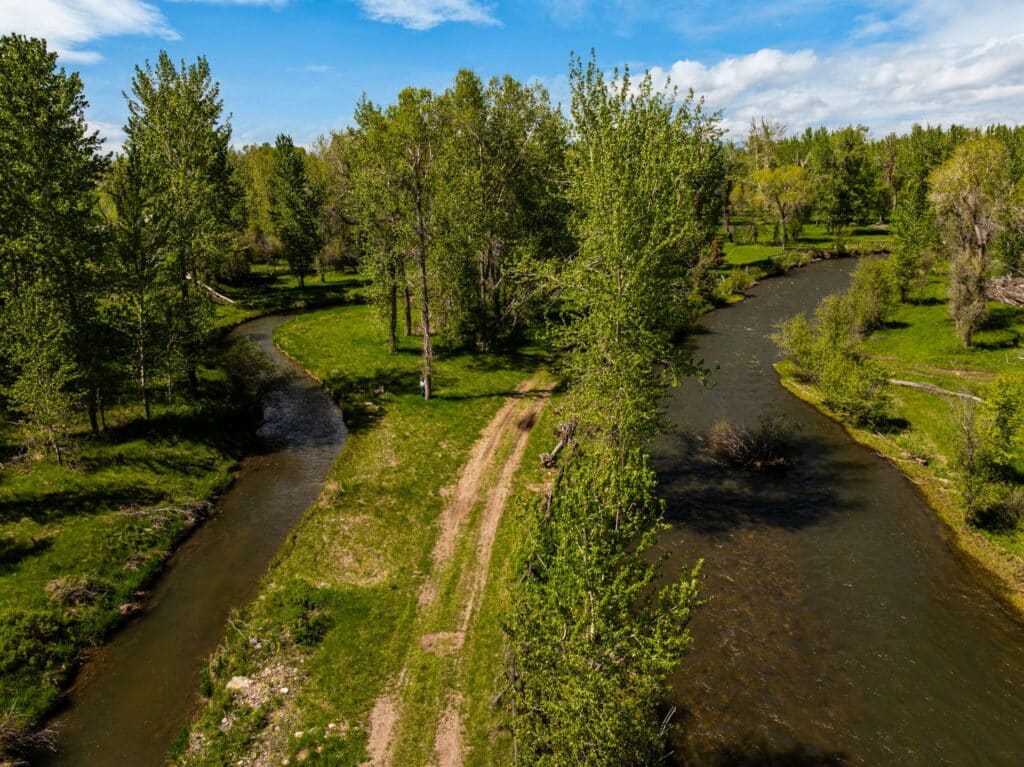
It does, and it’s worth knowing before you list or buy a property with an easement on it. MLR has never treated a two-track as a road, and we don’t restrict ATV use. Other land trusts do, and frankly I don’t know how you reconcile that with calling yourself an agricultural land trust nor is it really an enforceable term. That gets at something I think about a lot when drafting these: what can actually be enforced? MLR has one very old easement, from the early days, that requires dry-fly fishing only on a stretch of water. That’s a term a landowner felt strongly about at the time, and in hindsight, we probably should have pushed back harder. It’s essentially unenforceable now.
If you think about these as durability tools meant to last a hundred years or more, both the land trust and the landowners who come after have to be able to live with the terms. The more workable economics you leave on the ground for future owners, the better. Some of these older easements have things like unlimited employee housing written in — which, honestly, you could drive a truck through. What counts as employee housing? Nobody really knows. That’s why MLR sends people out to visit these properties every year and maintains real relationships with landowners, rather than just filing the document and hoping for the best.
What’s the actual headache with a decades-old easement when it comes time to sell?
Tracking. Say an easement is 30 years old, the property has been divided four times, and it allows three homes across what’s now five separate parcels. You have to track not just the easement terms themselves, but every transfer deed since, to figure out who actually holds the rights to build. If a listing says a property allows a certain number of houses, and nobody’s tracked what’s happened to that easement since it was recorded, you genuinely can’t give an accurate answer about what is and isn’t allowed. Amendments happen too, though they’re not common, a landowners can request one, but the rule is it’s a one-way ratchet. Terms can only get tighter, never looser, and there can be no private benefit to the landowner in the process. Occasionally an amendment genuinely improves the conservation value with no private benefit, and in those cases, it’s possible but it takes real analysis to get there.
Are the newer, IRS-deductible easements any easier to work with?

Considerably. Over time, they’ve gotten less ambiguous. We used to draw building envelopes with what were basically magic markers on a paper map — GIS technology has changed that entirely, and now you’ll often see actual surveys done for these envelopes. There tend to be fewer allowable divisions than the older easements too, partly for legal reasons and partly because the appraisal room has tightened. Buyers over the last twenty years, whether they’re after trout water or elk ground or both, generally haven’t been buying to subdivide. So when these properties trade, they haven’t shown much of a loss, and appraisers have had to reflect that if a deduction or a sale price is going to hold up.
But I want to be honest about something: the old ones don’t get fixed. If an easement from thirty years ago says three homes at 2,500 square feet, and that’s built out, it’s 2,500 square feet — permanently. We have an obligation as a land trust, and an obligation to the IRS, to steward what was actually signed. Every so often people have found a workaround by consolidating more land and bringing in a meaningful conservation benefit that opens a bit of an off-ramp, but that’s the exception, not something you can count on. If you’re representing a buyer or seller on a property with an old easement, that history is worth digging into before anyone signs anything.
In the final piece, we’ll cover the NRCS-funded programs specifically, the federal government’s role in enforcement, and what actually makes a land trust a trustworthy long-term partner.
See other related posts from Kendall:
Ask Kendall Van Dyk, Part 1: The State of Private Land Conservation