Few pieces of legislation have done more to protect the fishing experience on America’s rivers, lakes, and streams than the Dingell-Johnson Sport Fish Restoration Act of 1950. For buyers of ranch land, waterfront property, and hunting and fishing land, understanding this law offers important context for why so many waterways across the West and beyond support thriving, well-managed fish populations today.
Born out of growing recognition that recreational fishing was placing increasing pressure on fish populations across the country, the act created a self-sustaining funding mechanism that has quietly supported fisheries conservation for more than seven decades. It rarely makes headlines, but its impact is felt every time an angler casts a line into a healthy, well-stocked waterway, including the rivers and streams that flow through or border private ranch land.
What Is The Dingell-Johnson Act?
The Dingell-Johnson Act, formally known as the Federal Aid in Sport Fish Restoration Act, was signed into law in 1950 and stands as one of the most enduring conservation statutes in American history. Modeled after the Pittman-Robertson Act of 1937, which applied the same funding philosophy to wildlife and hunting, the Dingell-Johnson Act extended the user-pay, user-benefit model to recreational fishing.
The result was a dedicated, self-replenishing source of conservation funding that does not rely on annual congressional appropriations or compete with other budget priorities.
How The Funding Works
 |
 |
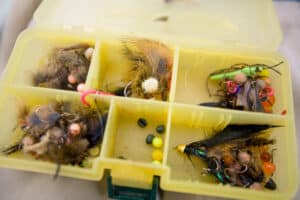 |
At its core, the act established an excise tax system requiring manufacturers to pay taxes on fishing equipment such as rods, reels, tackle, lures, and related gear. These revenues flow into the Federal Aid in Sport Fish Restoration Fund and are distributed directly to state fish and wildlife agencies, rather than disappearing into the general federal treasury.
This dedicated funding structure was considered groundbreaking at the time and has proven remarkably durable over the decades. It ensures that money generated by the fishing and boating industries flows back into the programs that sustain the fisheries on which those industries depend.
How Funds Are Distributed to Each State
 |
 |
 |
The distribution formula balances two key factors: the number of paid fishing license holders in each state and the state’s total land area. No single state can receive more than 5% of the total funds, and none can receive less than 1%, ensuring that even smaller states with fewer anglers have meaningful resources to work with. States must provide a 25% funding match, with the federal government covering the remaining 75%.
This structure gives state wildlife agencies a reliable, recurring budget to manage their fisheries and directly benefits landowners whose properties include streams, rivers, ponds, or lake frontage.
What Projects Qualify for Dingell-Johnson Funding?
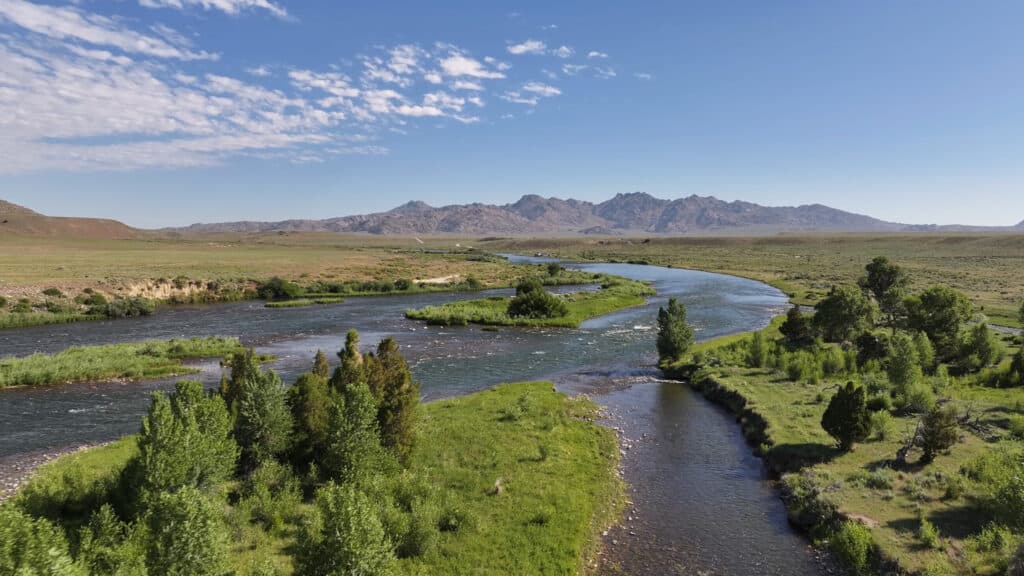
The range of eligible projects is broad and directly relevant to anyone who owns or is considering purchasing ranch land or fishing property. States have used Dingell-Johnson dollars to restore and improve fish habitat along rivers and streams, conduct population surveys and fisheries research, construct and improve public boat launches and fishing access sites, fund aquatic education programs, and support fish stocking and hatchery operations. Over time, this investment has translated into measurable improvements in fish populations and water quality across the country — a direct benefit to landowners who value productive fisheries on or near their property.
The Wallop-Breaux Amendment: Expanding the Program

The act was significantly strengthened by the Wallop-Breaux Amendment in 1984, which expanded the funding base to include import duties on fishing tackle and equipment as well as taxes on pleasure boat fuel. This amendment increased the amount of money flowing into the program. It directed a portion of funds specifically toward boating infrastructure and safety, reflecting the growing overlap between recreational fishing and boating interests.
For ranch and waterfront landowners, the Wallop-Breaux expansion meant more state resources dedicated to habitat and access improvements that increase both the ecological and recreational value of fishing waters.
A Track Record Measured in Billions
Since its passage, the Dingell-Johnson Act and its amendments have generated billions of dollars for fisheries conservation, making it one of the most successful examples of conservation finance in the world. It embodies a principle that has guided American conservation policy for nearly a century: that the people who use and enjoy natural resources have both the responsibility and the motivation to fund their protection and restoration.
For anyone evaluating ranch real estate or waterfront land, the legacy of this legislation is tangible. The productive fisheries found on and around premium ranch properties across the American West and beyond didn’t happen by accident. They are, in significant part, the result of sustained, structured investment enabled by laws like the Dingell-Johnson Act.
Buying Ranch Land With Quality Fishing Water
When you’re evaluating a ranch or rural property with riverfrontage, stream access, or private fishing water, the health of those fisheries is shaped by decades of state and federal conservation work. Much of it is funded through the Dingell-Johnson framework. At Swan Land Company, we specialize in ranch and recreational properties where water, wildlife, and land come together.