Landowners have an increased responsibility when a Red Flag Warning is issued to remove any ignition sources and prepare their properties. The conditions optimal for rapid fire spread. Low humidity, strong winds, and dry vegetation create conditions in which a small spark can quickly escalate into an uncontrollable wildfire. Therefore, every precaution is essential.
The number one step is to stop all burning. It doesn’t matter whether you have a valid burn permit; all forms of open burning should be ceased. Even if Fire agencies issue mandatory burn bans alongside Red Flag Warnings, landowners should not wait for this requirement before taking action. The dangerous conditions themselves are reason enough to stop all burning activities.
Activities that generate heat or sparks, such as chainsaws, mowers, and any heated equipment, can emit sparks that may ignite dry grass or brush unexpectedly. If using these types of tools is necessary, it’s optimal to schedule the work for early morning when temperatures are cooler, winds are calmer, and humidity is higher. Postponing the work until the fire warning has been lifted is a smart move. Even parked or driven vehicles on dry grass can unintentionally spark a flame, as hot catalytic converters and exhaust systems can do the same.
Think proactively about your property by clearing gutters, rooflines, and decks of accumulated dry leaves and pine needles, because fire embers can blow in the wind and travel far. Relocate firewood stacks, propane tanks, and other flammable materials away from structures as much as possible. Having a garden hose accessible and ready to use, with water pressure on, can make a significant difference in the early moments of ember ignition.
Livestock should also be considered. It’s essential to have a clear and practiced plan for quickly moving animals. This can be done by ensuring trailers are hitched or easily accessible and by gathering animals in a location that allows for immediate loading. If an evacuation order is issued, it may be too late to complete all required tasks.
Keep an eye out and check local emergency management agencies, like the National Weather Service, and county alert systems for current conditions. Thinking about fueling personal vehicles and creating a to-go bag that can be easily grabbed can help avoid dangerous delays.
After the Red Flag Warning has expired, landowners should proceed with caution and refrain from immediately resuming burning or engaging in other high-risk activities. Even after the warning ends, fuels can still be critically dry, and fire weather conditions could return quickly. Check with local fire authorities before resuming any burning activities just to be on the safe side.
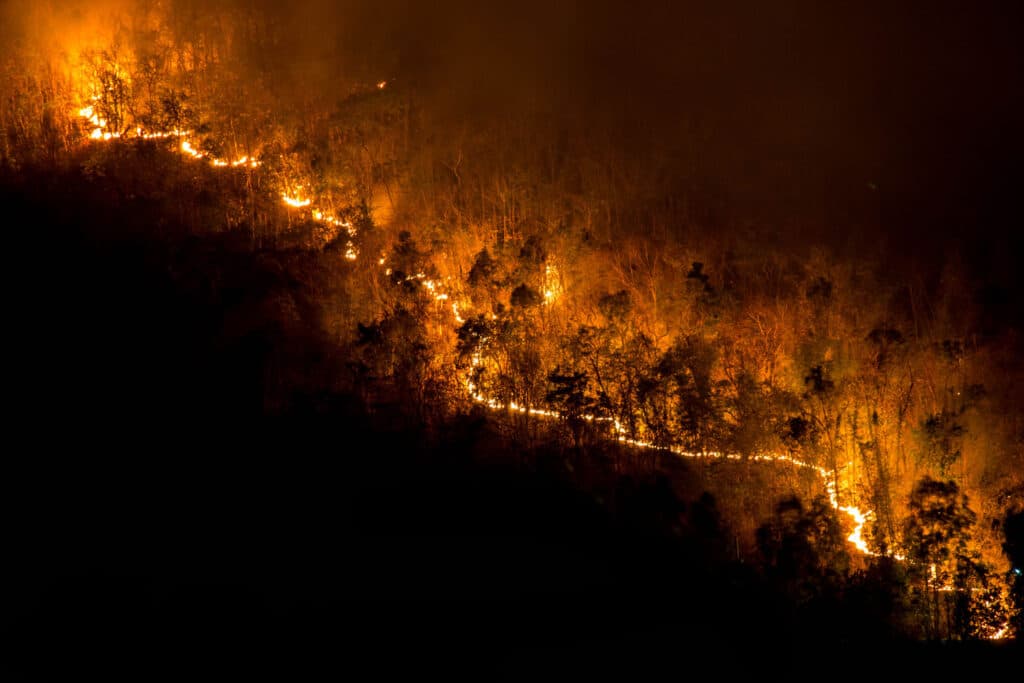
Fires start and spread quickly without warning. Be proactive and treat the threat seriously. Use your social media apps, walk around your property, identify fire hazards, and know your evacuation route. By investing time in a strategy, you could ward off a disaster.
For more reading material on this topic visit our other blog: Wildfire Risk: A Guide for Landowners