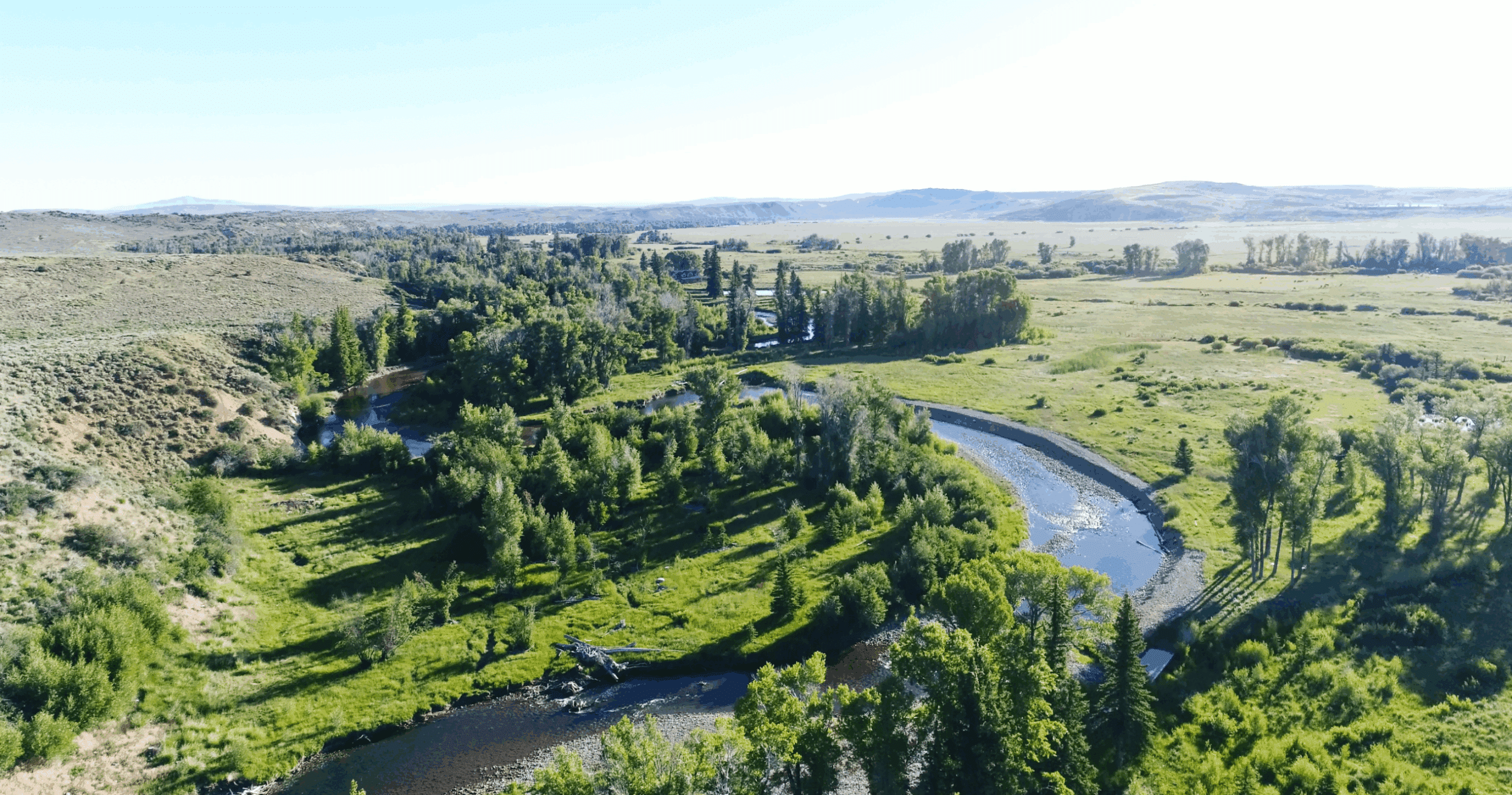
Few assets in the American West reward serious study as much as ranch real estate does. On the same acres, a ranch functions simultaneously as a working cattle operation, wildlife preserve, water asset, fly fishing destination, and generational lifestyle property.
Ranch investments that have appreciated the most share a common architecture: senior water rights, trophy wildlife, blue-ribbon fishing, public land adjacency, and conservation easement potential — stacked until the property becomes something the market has no comparable.
What follows is part three of those drivers, and how the most successful buyers have used them to build lasting value in one of America’s most distinctive asset classes.
Ranch Real Estate: Location, Amenity Access & the Hub Effect
 |
 |
 |
The most valuable ranches in the American West share a single defining characteristic: they cannot be replicated. Senior water rights, trophy wildlife, blue-ribbon fishing, public land adjacency — when these attributes stack on the same deed, the property stops competing on price per acre and starts competing on scarcity. What follows is a guide to those attributes, and how serious investors have used them to build lasting value in one of America’s most distinctive asset classes.
Using Montana as an example, the geographic distribution of ranch values, is not random — it follows a clear pattern related to proximity to amenity hubs, airport access, and the infrastructure of modern life. Understanding this geography is essential for both the buying strategy and the long-term value outlook of any ranch investment.
In the case of Bozeman, it has been a dominant hub driving up ranch values in western Montana for the past 15 years. The city has grown from a small university town to a genuine destination with a top-tier airport, strong restaurant and cultural scene, world-class outdoor recreation, and a professional services infrastructure that supports wealthy landowners. The concentric rings of value emanating from Bozeman reach across the Gallatin Valley into Paradise Valley to the south, the Shields River Valley to the east, Madison County to the west, and Park County toward Livingston and beyond. Properties within 60 minutes of Bozeman Yellowstone International have appreciated the most and continue to command the highest prices among ranches near Bozeman, Montana.
Missoula operates similarly for western Montana ranch properties, with strong university and cultural character, a functional regional airport, and access to the Bitterroot, Blackfoot, Flathead, and Clark Fork river systems. Whitefish and Kalispell serve the Flathead Valley and the Glacier market, attracting buyers drawn by skiing at Whitefish Mountain Resort and proximity to Glacier National Park. Livingston and Big Timber function as secondary hubs that benefit from their proximity to Bozeman while offering more rural character and lower price points.
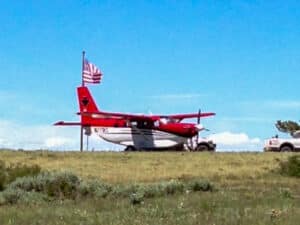
The airport access variable deserves specific attention. Buyers of luxury ranches for sale in Montana are almost universally traveling to their properties rather than living there full-time, at least initially. The friction of access — how many flight segments, what size aircraft, how long the drive to the nearest airport — directly affects how often they use the property and, therefore, how much they value it. Ranches with private airstrips or proximity to airports that can handle private aircraft have a specific advantage in reaching the buyer profile most likely to pay premium prices — making private airstrip ranch for sale listings among the most sought-after in the market.
The trend worth watching is the expansion of the value corridor beyond traditional hubs. Still using Bozeman as an example, it has become genuinely expensive and crowded by Montana standards, buyers have begun moving further out — into the Ruby Valley, Stillwater County, Judith Basin, and Sweet Grass County. These areas offer the Montana ranch experience at lower price points, but with longer drives and less access to amenities. Whether they represent the front edge of an expanding value wave or simply a second-tier market that will always trade at a discount is a question that depends heavily on how remote work trends evolve and whether the amenity infrastructure in secondary towns develops to support wealthy landowners.
How Elite Ranch Investments Are Built: The Compounding Value Thesis
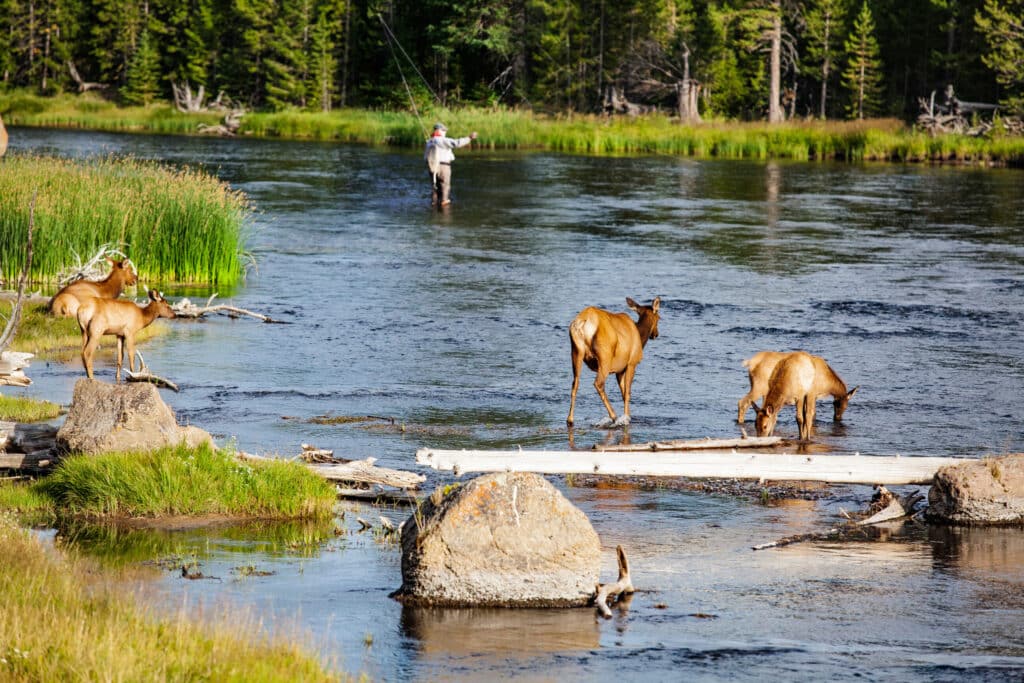
The most important strategic insight in all of this is that ranch value factors compound multiplicatively rather than additively. A ranch with one strong attribute is a decent asset. A ranch with three or four reinforcing attributes is a genuinely scarce asset. A ranch with five or six is irreplaceable, and irreplaceable assets attract buyers who are not price-sensitive in the normal sense.
The path to building a genuinely elite trophy ranch — either through acquisition of an already-assembled property or through deliberate assembly and improvement over time — runs through a consistent set of principles. Acquire water first and never compromise on it; ranch land with senior water rights represents the foundation of every sound acquisition. Choose a location with long-term amenity access in mind. Prioritize public land adjacent to ranches as a permanent, structural attribute. Invest in wildlife management consistently over years and decades, not episodically. Build or improve physical infrastructure to align with the buyer profile that determines exit value. Evaluate conservation easement ranch potential as embedded value from day one rather than as an afterthought.
The buyers who have done this most successfully are those who came in with a clear thesis about what they were building, had the capital to be patient and to invest in management and improvements over time, and understood from the beginning that they were assembling a multi-attribute asset rather than simply buying land. The result, when executed well, is a property with no true comparable — a fly-fishing ranch with blue-ribbon access, senior water rights, trophy wildlife, and public-land adjacency — and that commands a price reflecting genuine scarcity. That is the ultimate destination for ranch land appreciation and ranch investment in the American West.
The right ranch is rare. Browse what’s available now!
Swan Land Company Listings