Exceptional Eastern Montana Cattle Ranch
Garfield & Rosebud Counties
Antelope Springs Ranch
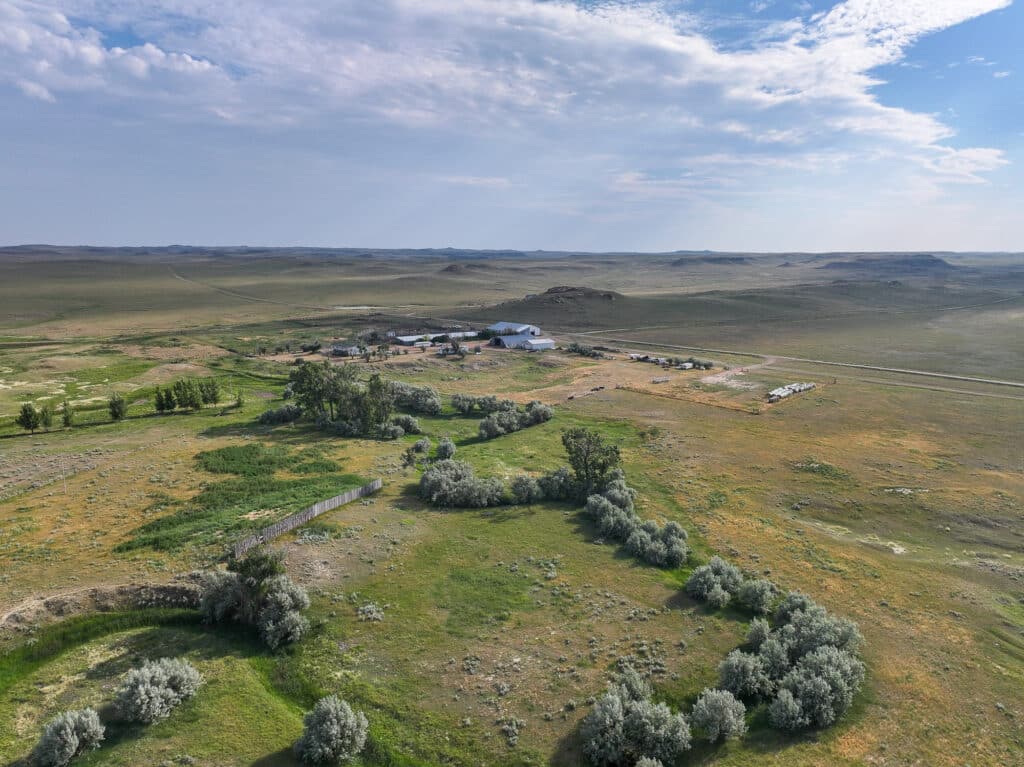
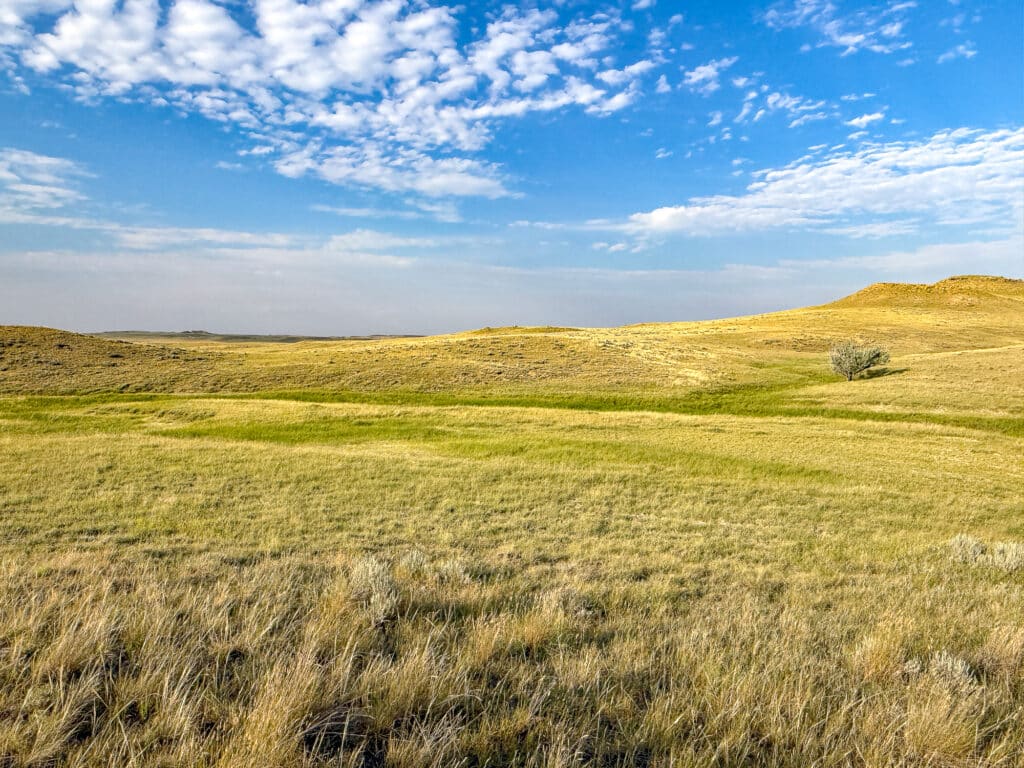
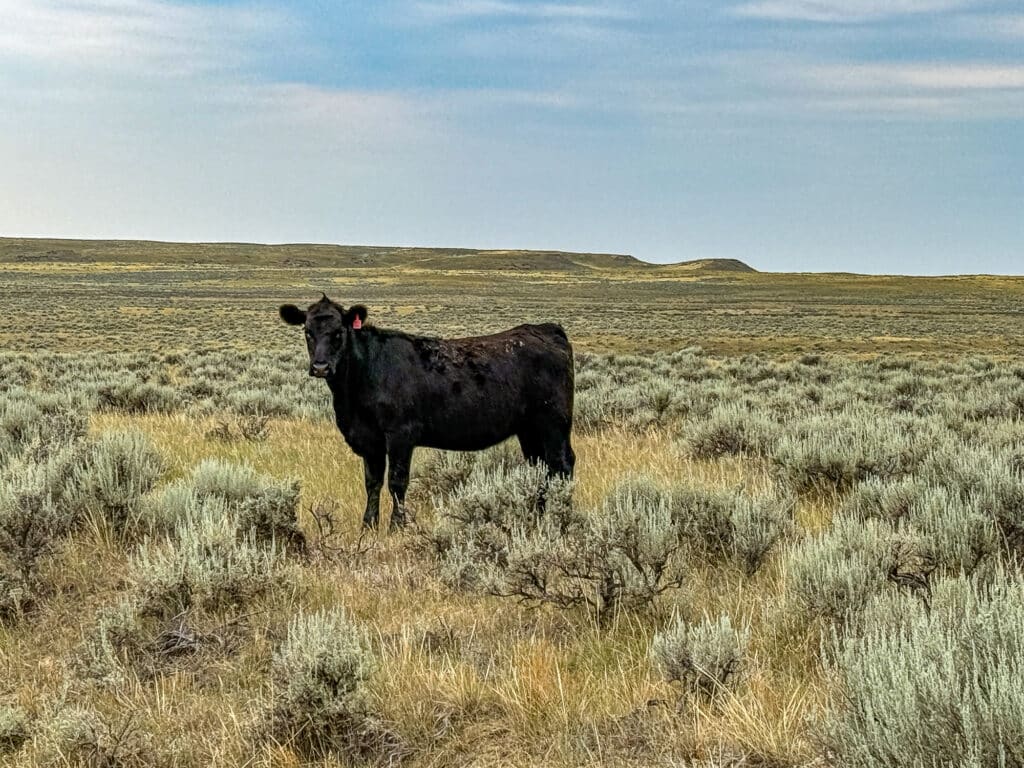
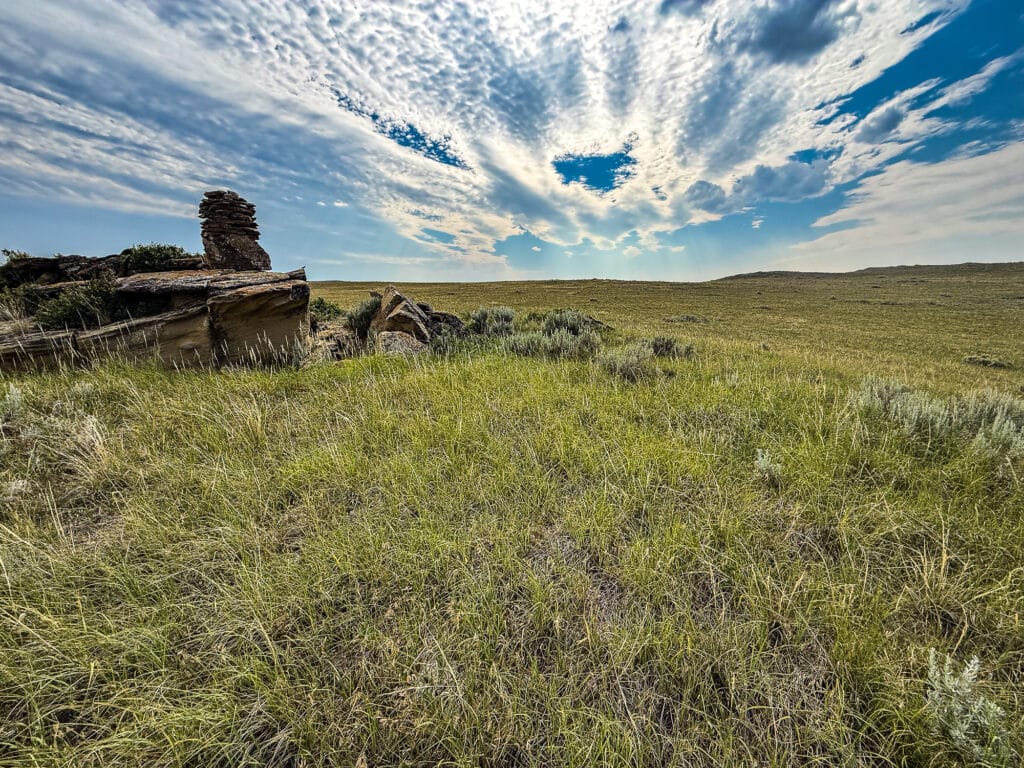
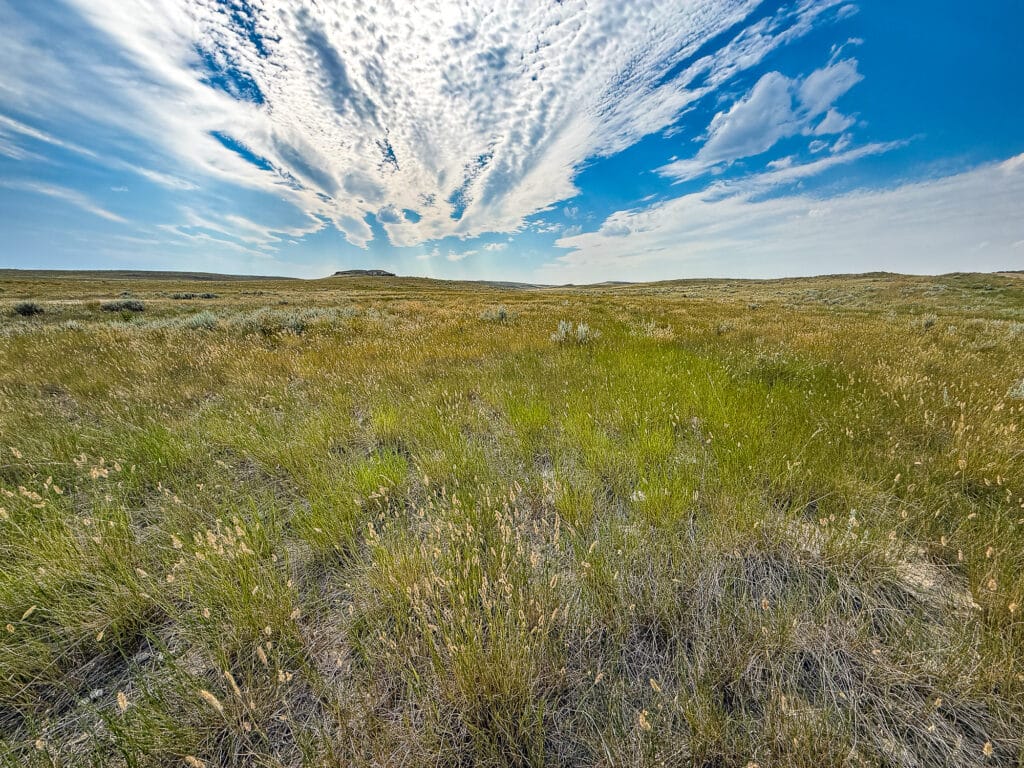
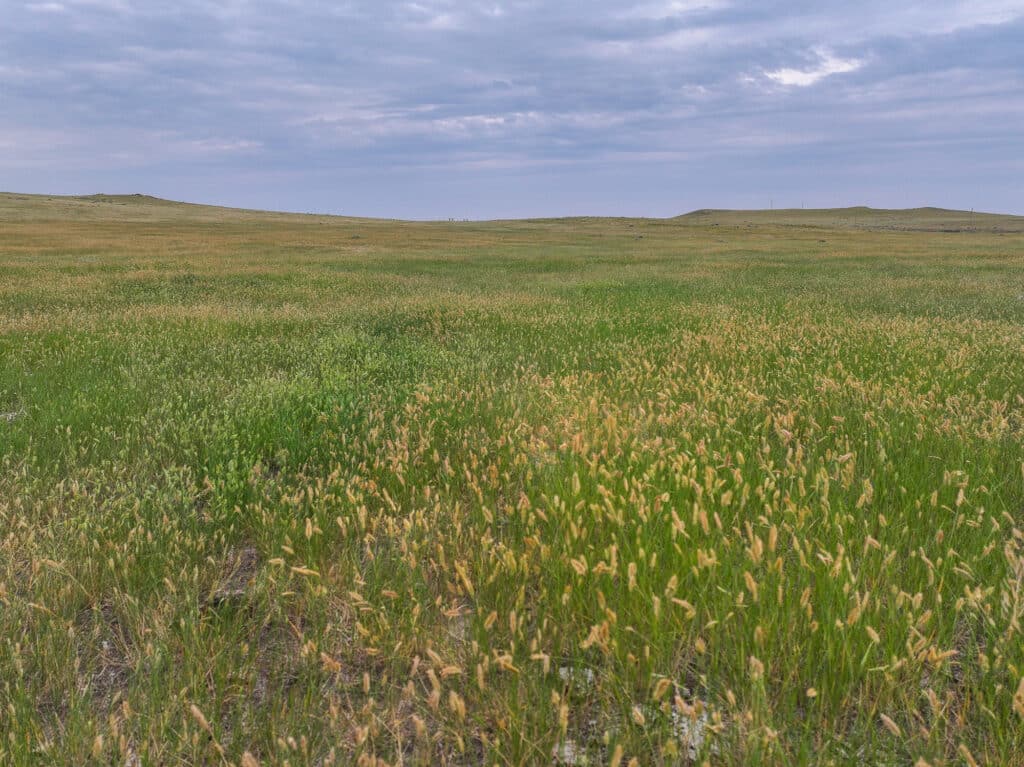
Located in Eastern Montana’s short-grass prairie country, Antelope Springs Ranch encompasses approximately 49,398 total acres, of which 43,278 are deeded, of open grasslands. For the past thirteen years, it has been managed under a regenerative grazing model that has kept this iconic landscape resilient through both high-moisture years and extended drought.
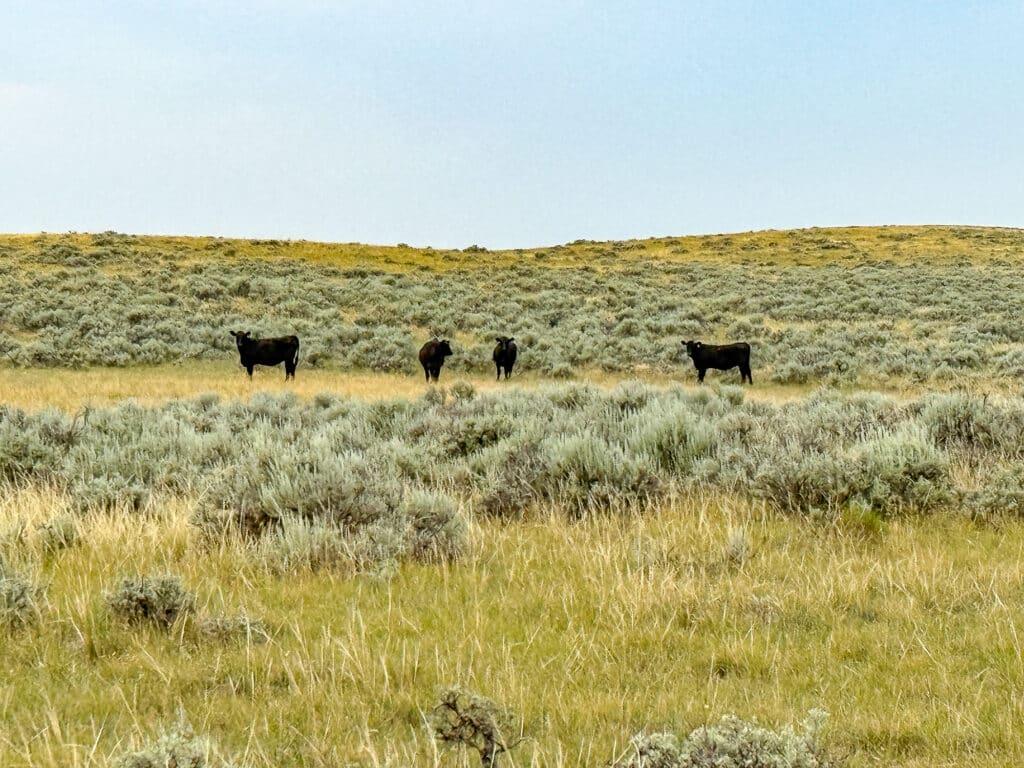
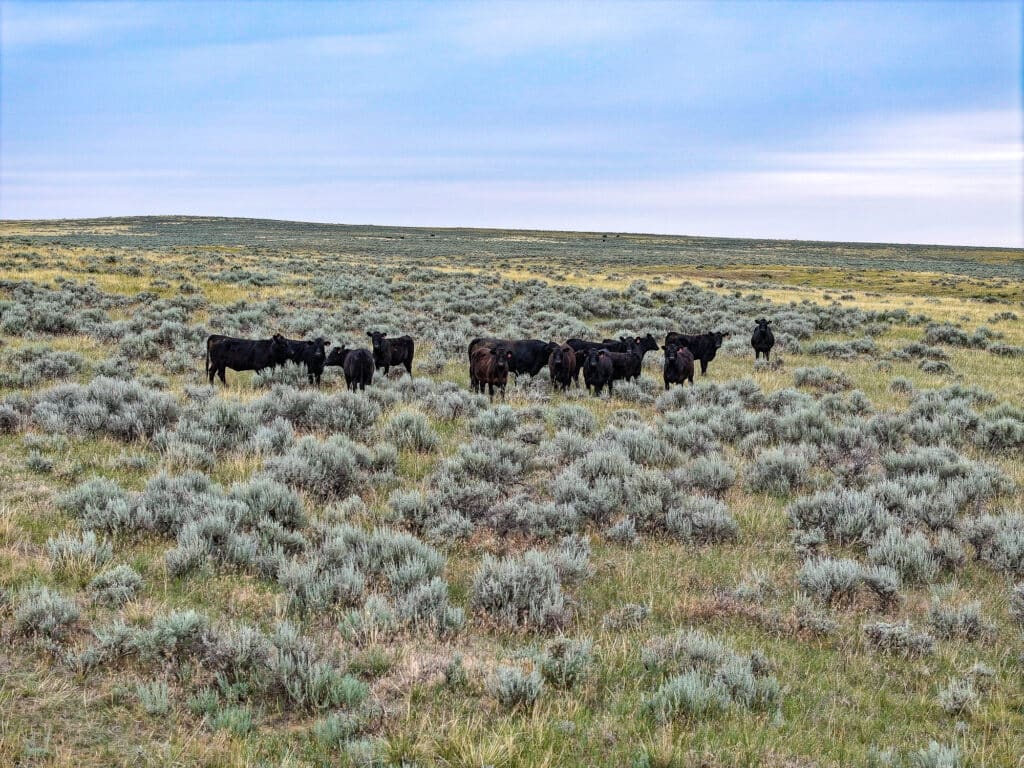
Currently the ranch is running 400 cow -calf pairs with an additional 900 head of yearlings for six-months for an estimated total of 740 animal units. Management believes that the ranch is stocked at about 60% of its carrying capacity which would rate the carrying capacity at 1,180 animal units.
The ranch’s on-site managers, the Smith Family, have been instrumental in restoring this resource through disciplined rotational grazing, soil-health practices, and riparian protection, complemented by thoughtful wildlife management. Their holistic approach has driven a resurgence of native prairie grasses and a measurable improvement in overall landscape health—gains that have been independently tracked since 2013 by Snaplands, an independent rangeland-monitoring firm.
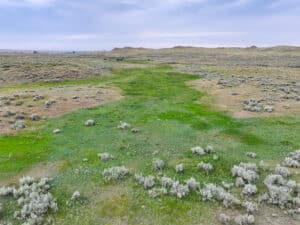
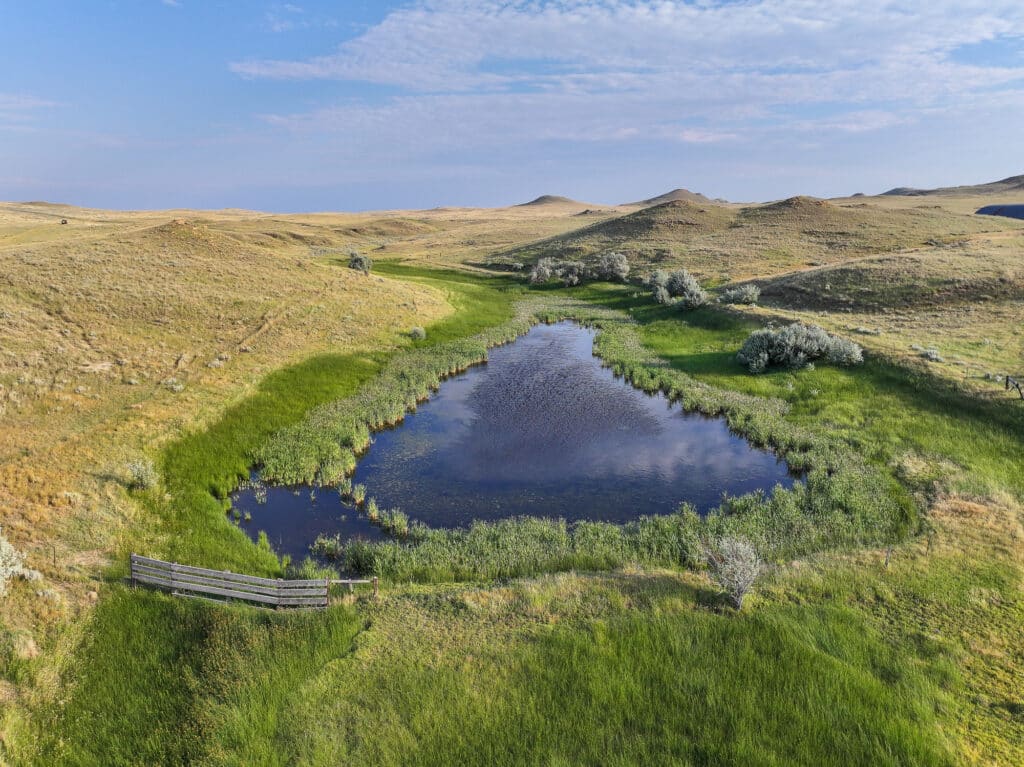
The ranch takes its name from Antelope Springs, three productive springs on the property that flow year-round—feeding a stock pond and forming a scenic backdrop for the historic Brooks Place.
The result is a working cattle ranch that pairs genuine ecological stewardship with a disciplined, low-input operating model: dependable performance on calves, produced from land that is measurably healthier than it was thirteen years ago.
The ranch is situated directly south of Jordan and north of Forsyth. To reach the headquarters from Billings, take State Highway 12 north to Carterville Road; at about the one-half-mile mark, Little Porcupine Creek Road bears north for about forty-eight miles to the ranch headquarters. At the Garfield County line, Little Porcupine Creek Road becomes Garfield County Road 216.
Driving from Miles City, the headquarters is about 70 miles: take State Highway 59 north to Cohagen, then head southwest on West Little Dry Road to where it intersects Garfield County Road 216, and head due south on 216 to the headquarters.
Antelope Springs Ranch is located about three hours northeast of Billings and seventy miles from Miles City. The nearest grocery store is in Jordan, forty-five minutes away. Children attend Cohagen Elementary School from kindergarten through eighth grade, then attend high school in Jordan.
JORDAN
Jordan offers the services needed to support a family and a farming/ranching operation, including banking, schools, USDA offices, groceries, implement and vehicle repair, fuel, farm/ranch supplies, motels, restaurants, and an airport for private planes.
SOUTH OF JORDAN
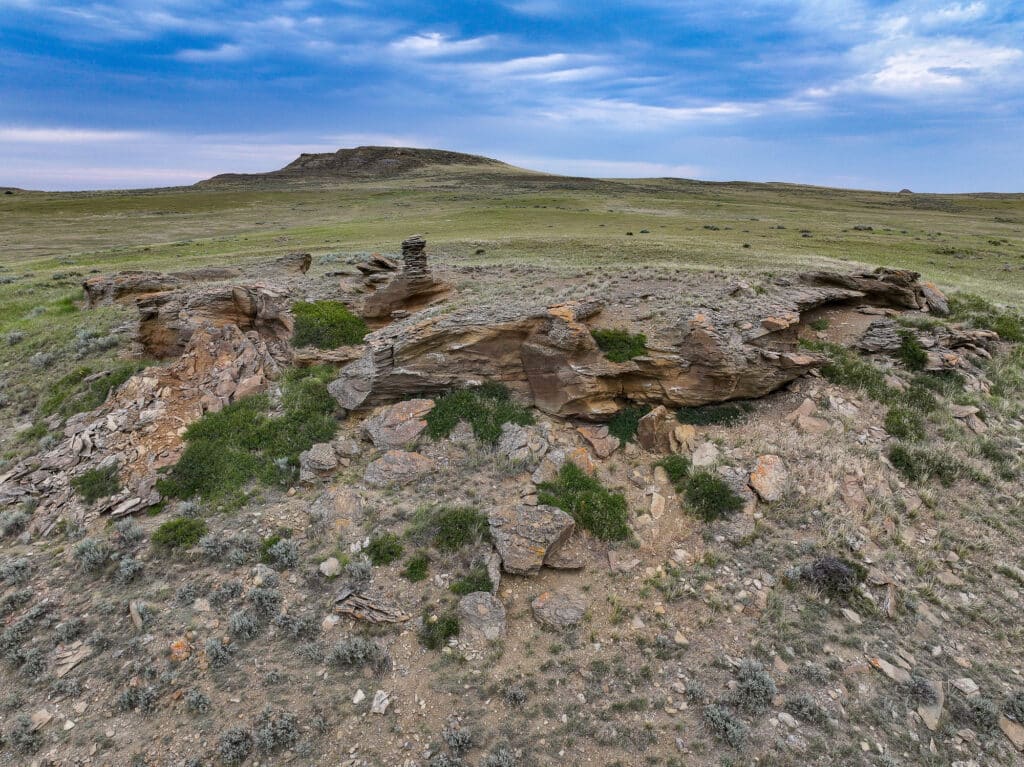
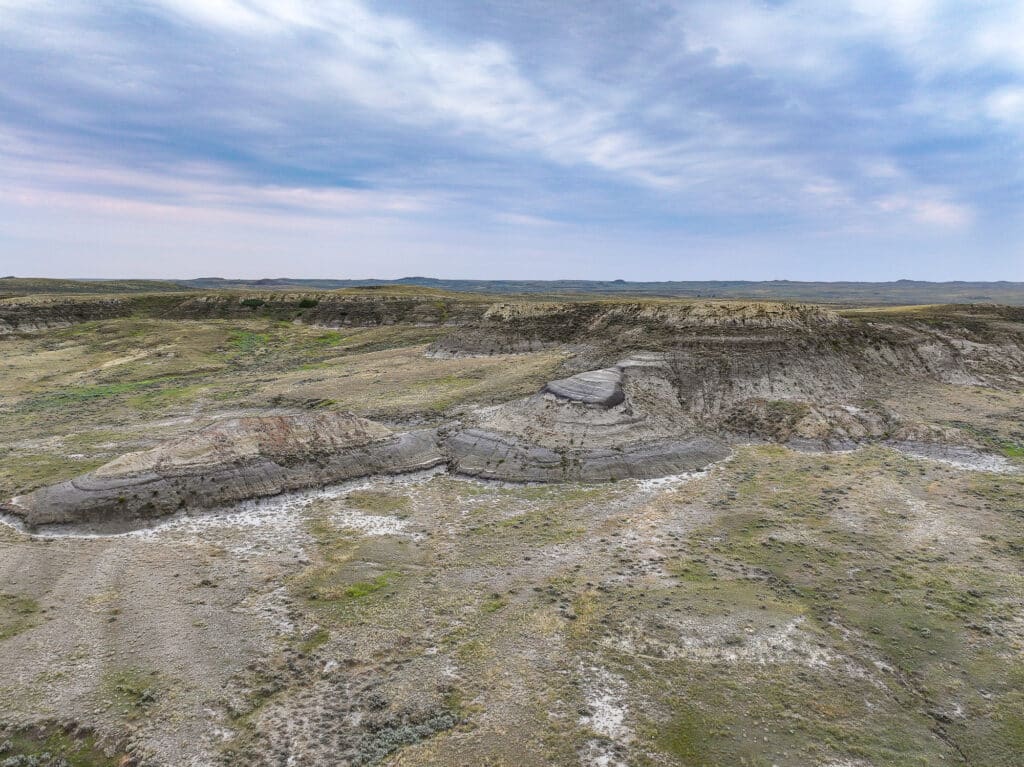
The area south of Jordan remains remote cowboy country—sparsely populated, wide-open rangeland that serves as a transition zone between the Missouri Breaks wilderness to the north and the more developed areas around Miles City to the south. This is still very much part of “The Big Open,” characterized by vast prairie landscapes, badlands formations, and working ranches.
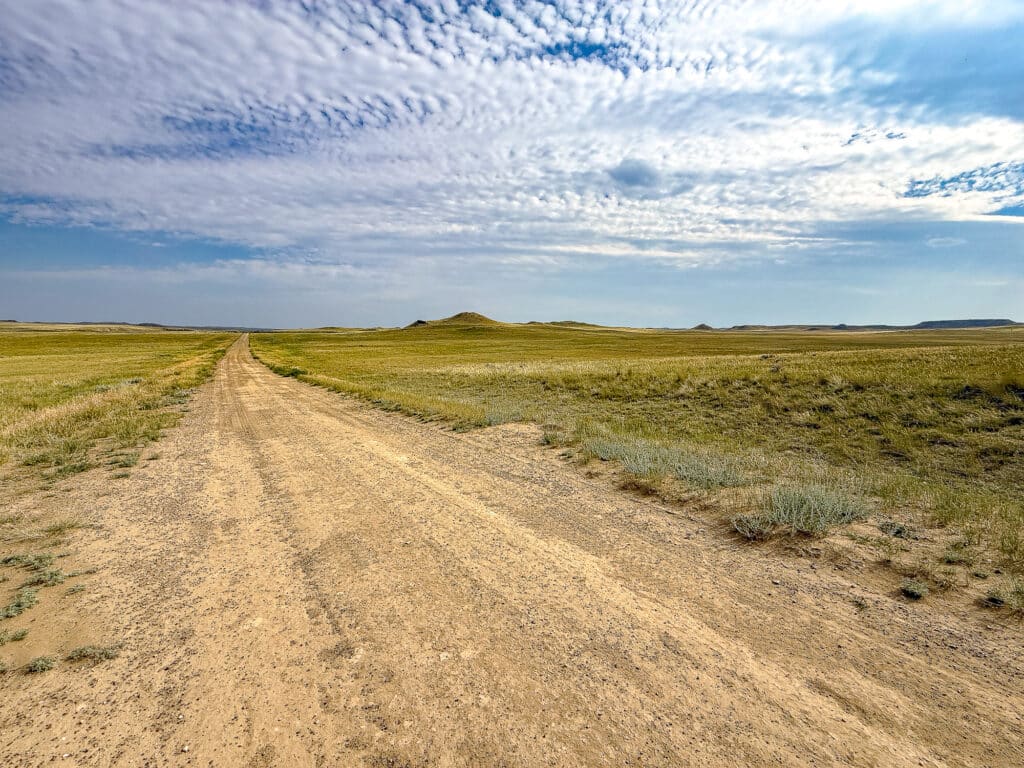
The elevation gain across the ranch is approximately 545 feet, with the highest elevation on the west portion of the property at 3,384 feet above sea level and the lowest on the southern portion at around 2,839 feet.
Cohagen experiences a typical eastern Montana climate, with warm summers and cold winters. From June through August, average highs range from 76°F to 86°F, with overnight lows between 48°F and 54°F. Winter brings much colder conditions, with average highs from December through February ranging from 31°F to 34°F and nighttime lows dropping to 7°F to 10°F. July is the warmest month and January the coldest, and the area experiences significant temperature swings between day and night throughout the year.
Average annual precipitation is typically 12 inches, though the past three years have been just under 10 inches. Spring brings the majority of this moisture, with late-season storms coming through in September; these fall storms also benefit the grass coming back in the spring. The winter months receive an average of approximately 24 inches of snow.
ACREAGE BREAKDOWN
| 49,398± 43,278± 3,200± 2,920± |
Total Acres Deeded Acres State of Montana Lease Acres BLM Lease Acres |
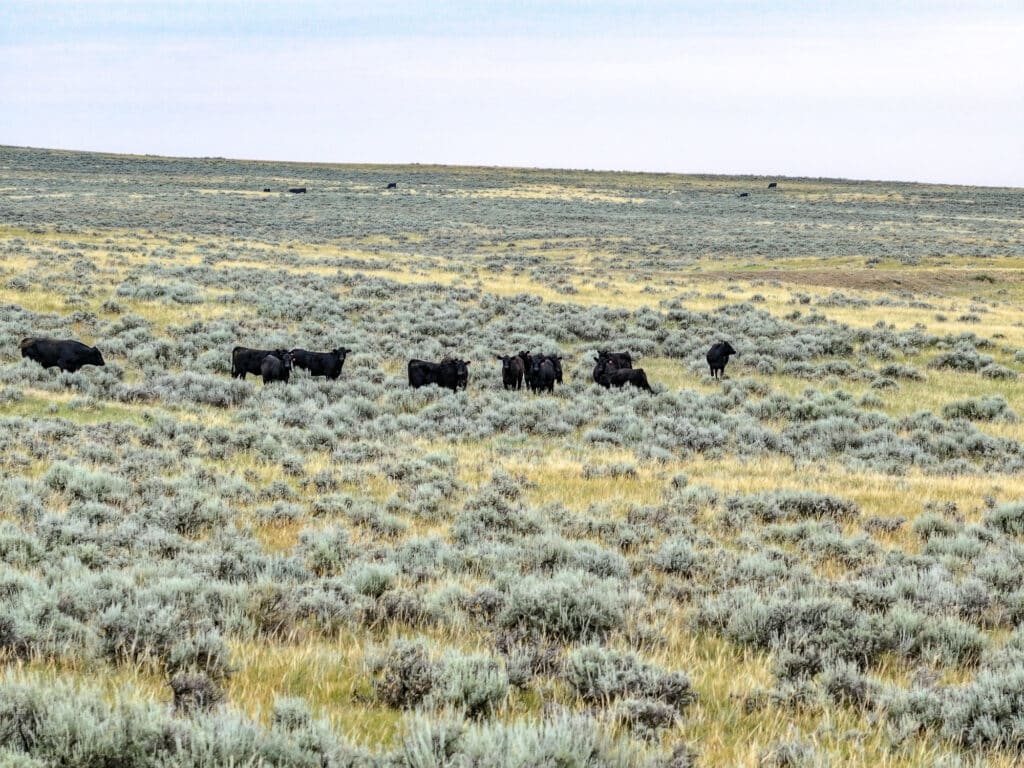
Antelope Springs Ranch currently runs 400 cow-calf pairs with an additional 900 head of yearlings for six-months for an estimated total of 740 animal units. Management believes that the ranch is stocked at about 60% of its carrying capacity which would rate the carrying capacity at 1,180 animal units. Historically, the ranch has carried around 560 cow-calf pairs in addition to the yearling herd. The area has experienced below-normal precipitation over the past six years, so management has run conservatively to preserve resources. In 2019—the last year the ranch was fully stocked—it carried substantially more livestock than it does today.
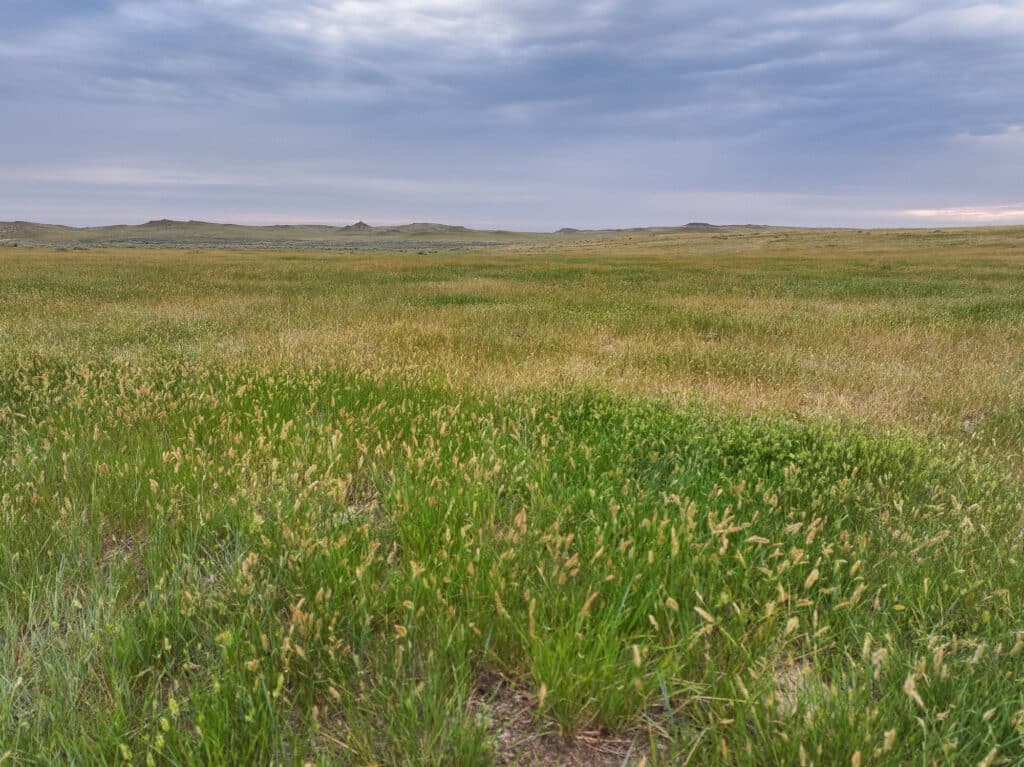
Calving season begins with the heifers around the first week of April, and the older cows begin calving the third week of April. Pasture grazing is managed so that heifers calve near the headquarters. The ranch rotates pastures so that each is grazed at different times of the year and the growing season, taking only about twenty-five percent of the existing forage to allow ample time for the grass resource to recover and flourish before the next grazing cycle. The goal is to graze each pasture only once per growing season and to alternate the time of year each pasture is used. This holistic approach has markedly improved both the grass resource and the diversity of grass species.
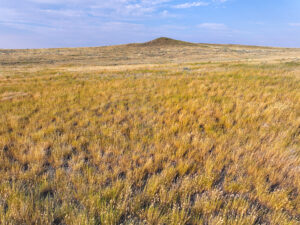
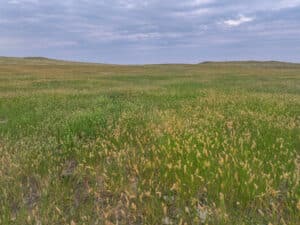
The native grasses prevalent on the ranch include needle-and-thread, blue grama, bluebunch wheatgrass, green needlegrass, needleleaf sedge, and prairie sandreed—a combination of warm- and cool-season species.
 |
 |
 |
The ranch typically weans calves in late October or early November, depending on weather and grass conditions. Calves have historically weighed between 450 and 500 pounds at weaning. Weaned calves are then backgrounded on the ranch until the December–January timeframe, when they are sold either through private treaty or the livestock yards in Billings.
Yearlings typically graze the southern pastures in a rotational pattern, finishing the late-summer/early-fall grazing near the headquarters for their October shipping date. Pastures are rotated every seven to ten days, keeping cattle on fresh grass and providing ample time for pastures to recover. Management is also careful to reserve sufficient grass for winter grazing of the cow herd.
The Smith Family owns the cow herd; the yearlings are brought in from the outside under a grazing-lease program.
Cows winter-graze the ranch. Over the past twelve years, the ranch has needed to feed hay for more than thirty days in only three of those years; thirty days of hay is always kept in stock. Typically, cows are fed hay for only four to five days during extreme winter conditions. Along with native grass, cows are supplemented with four pounds of distillers’ cake for additional energy.
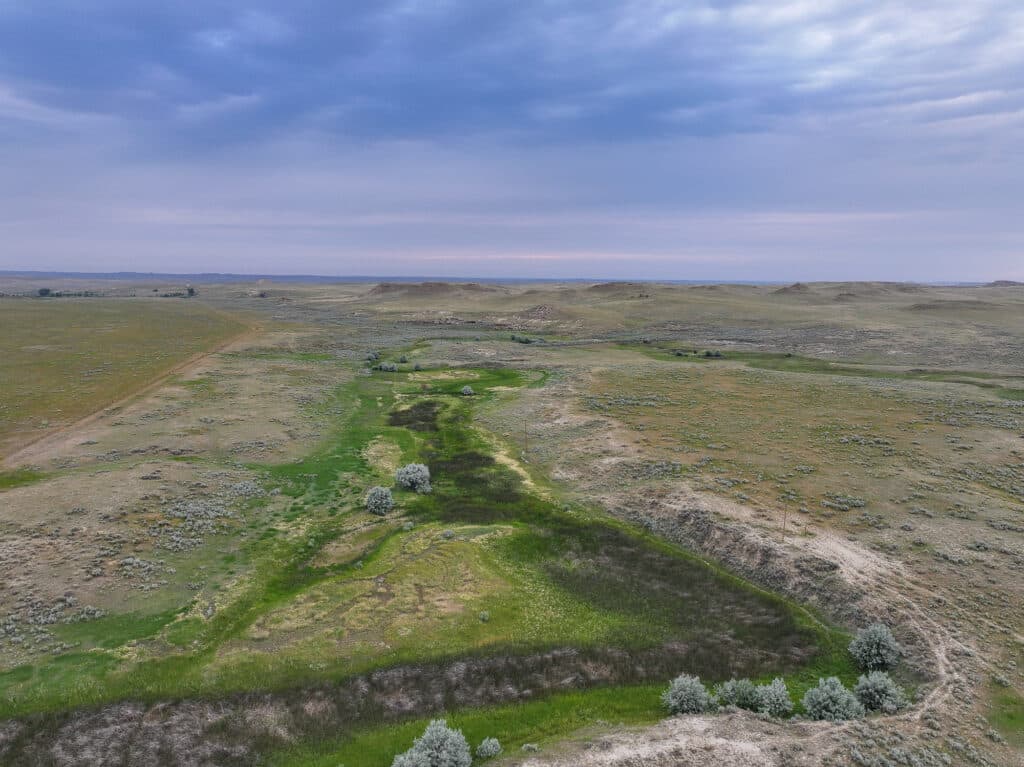
Much of what makes Antelope Springs valuable is not only the land, but the team that has stewarded it. The ranch’s on-site co-managers, the Smith Family, reside on the property and oversee daily operations. Over thirteen years, they have built and refined the regenerative system that is now in place—the rotational grazing plan, the conservative stocking strategy, the stock-water development, and the local knowledge and relationships that keep a remote operation running smoothly.
Their results speak for themselves: historic breed-up rates of 90 to 92 percent, a documented recovery of native prairie grasses, and third-party monitoring data showing sustained improvement in soil and grassland health. For a buyer, this is a rare opportunity to acquire not just a proven operation, but the team that built it.
To promote continuity of the holistic management approach, the seller will give preference to offers that include a minimum six-month transition-services period with the co-managers, commencing at closing. Following that period, interested buyers may negotiate an ongoing management-services arrangement directly with the co-managers. Any such arrangement would be contingent on the co-managers’ interest and availability and would be formalized through a separate agreement executed directly between the buyer and the co-managers.
The headquarters’ improvements are located on County Road 216. The 3,328-square-foot main home contains five bedrooms and has a full basement. Constructed in 1998, it is heated with propane-gas forced air and has central air conditioning.
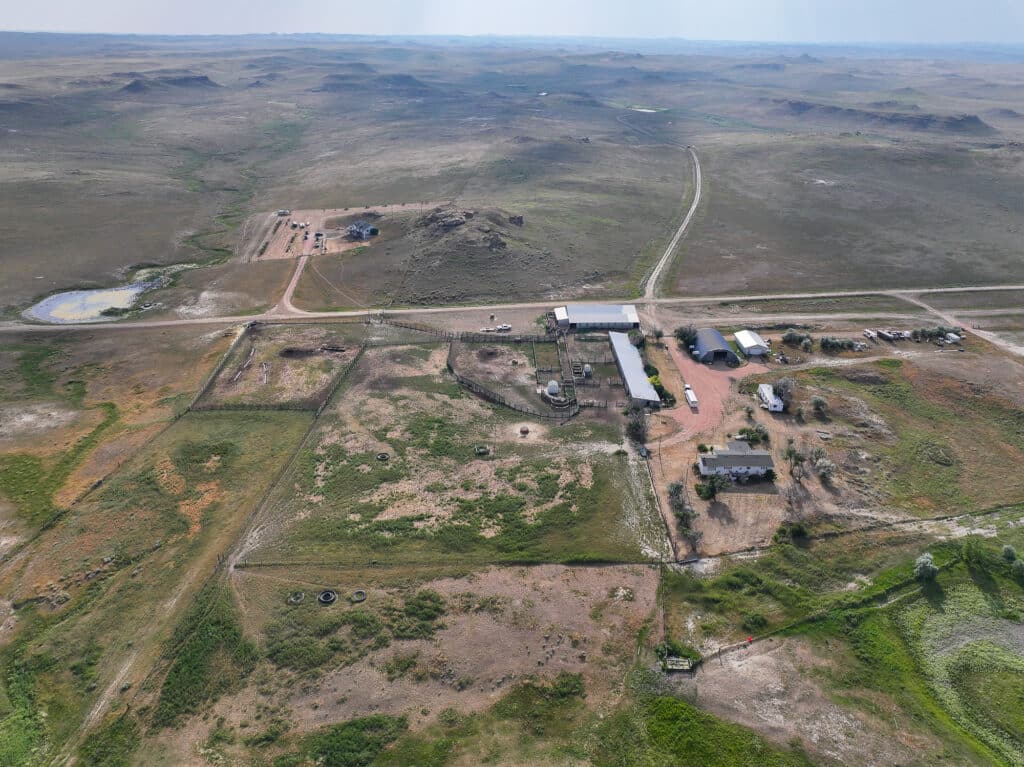
The ranch uses a main set of corrals at the headquarters for processing and shipping cattle, with a secondary set of shipping corrals located south of the headquarters along County Road 216. A 40,000-pound set of scales and a chute house are located at the corrals near the headquarters.
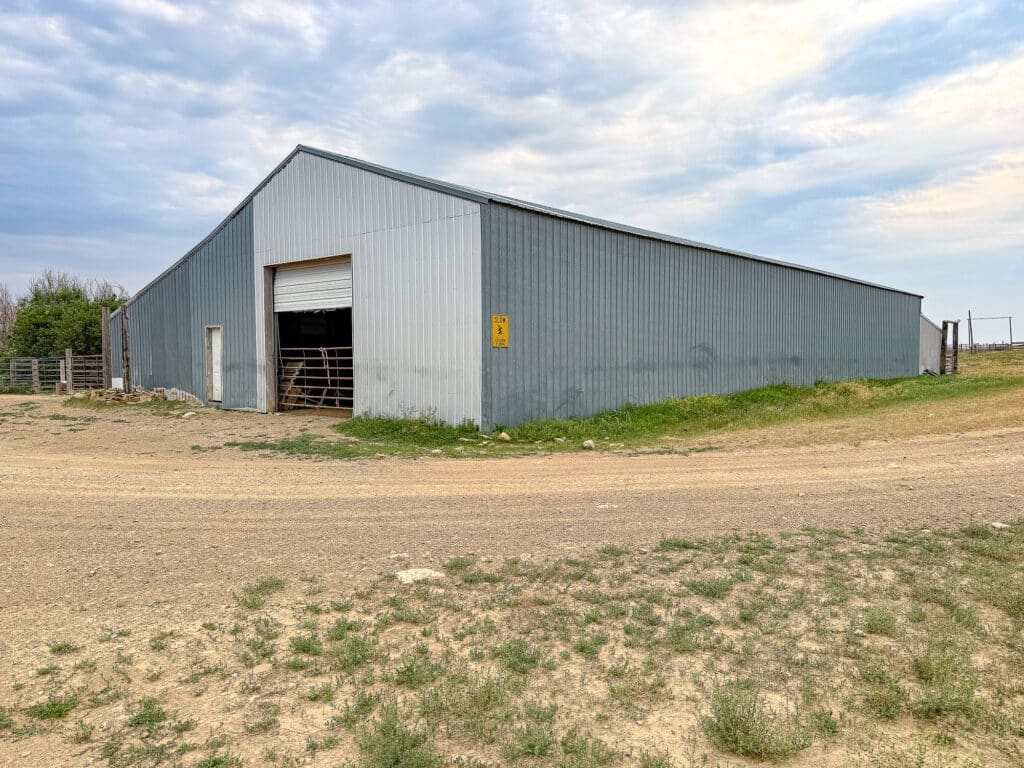
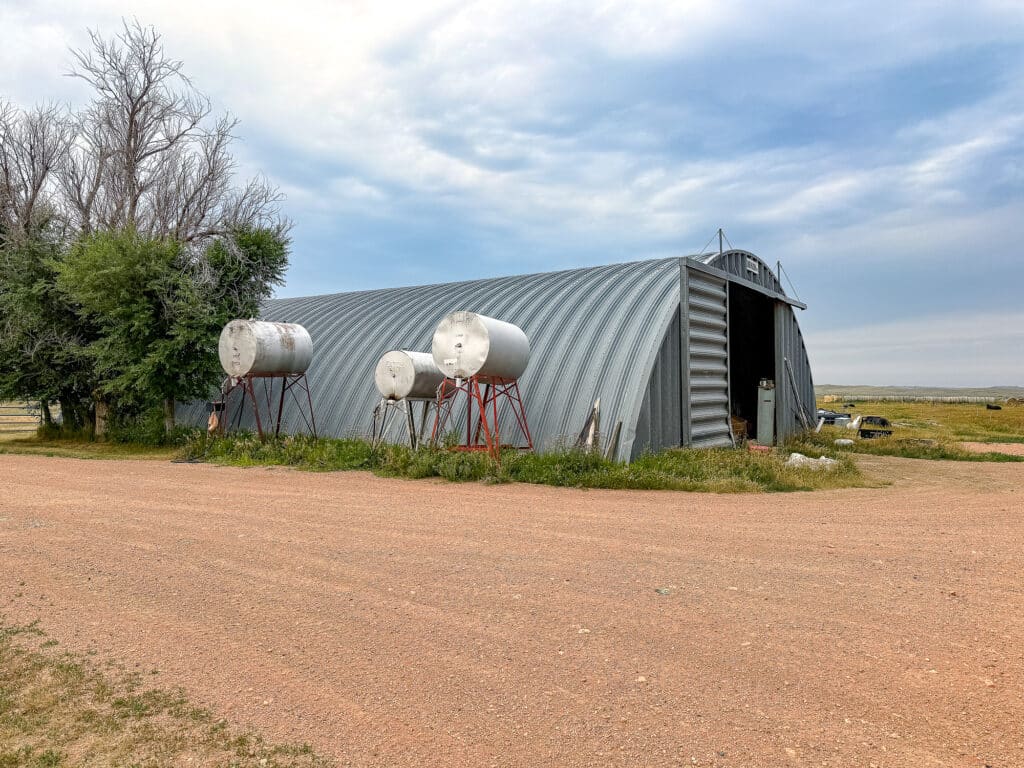
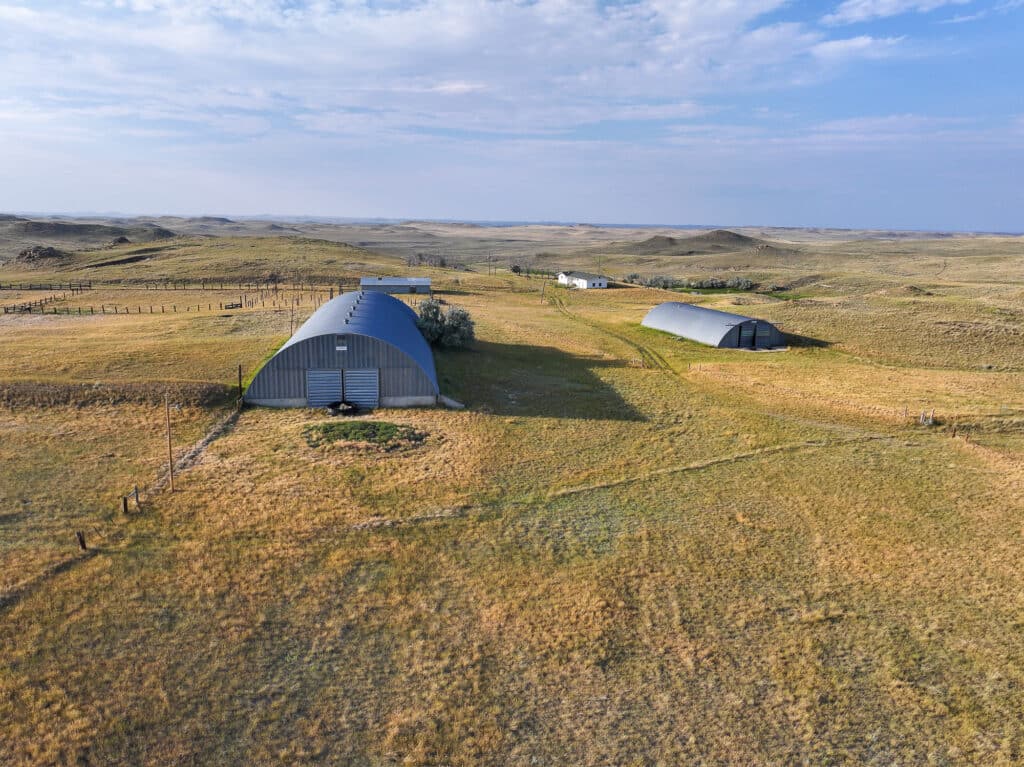
The Brooks Place home is used seasonally for hunters in the fall. Constructed in 1965 and subsequently remodeled, it consists of six bedrooms and a total of 5,544 square feet of living space with an attached single-car garage. It has both electric and propane-gas forced-air heating and central air conditioning. The home appears to be in relatively good repair despite not being continuously occupied in recent years. A good set of working corrals, two large Quonset storage buildings, and an additional storage building are also located at the Brooks Place.
 |
 |
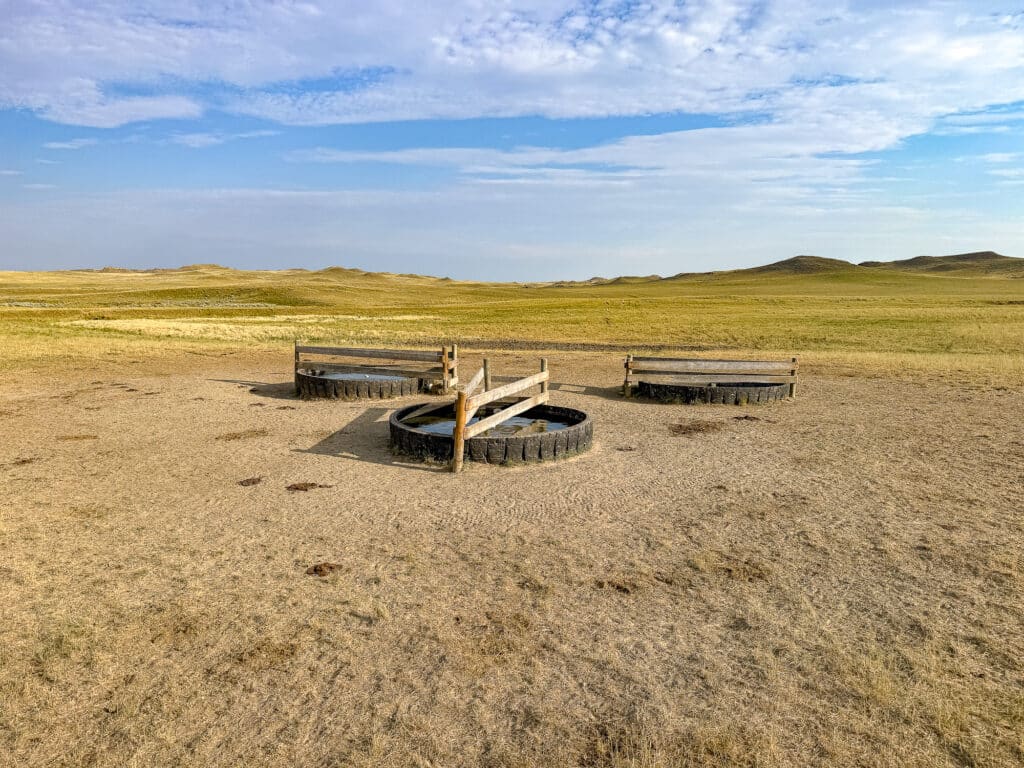
Two storage tanks that provide 20,000 gallons of water storage feed a series of tanks in the northern pastures. Stock water throughout the ranch is supplied by both stock tanks fed by wells and by natural reservoirs. A productive stock-water well at the Brooks Place serves three stock-tank locations that also supply the northern region of the ranch.
Management has developed additional pipelines and stock tanks throughout the ranch to further distribute cattle and minimize distances to fresh water. A complete summary of the water rights appurtenant to the ranch, along with a stock-tank and pipeline map, is available upon request through our Bozeman office.
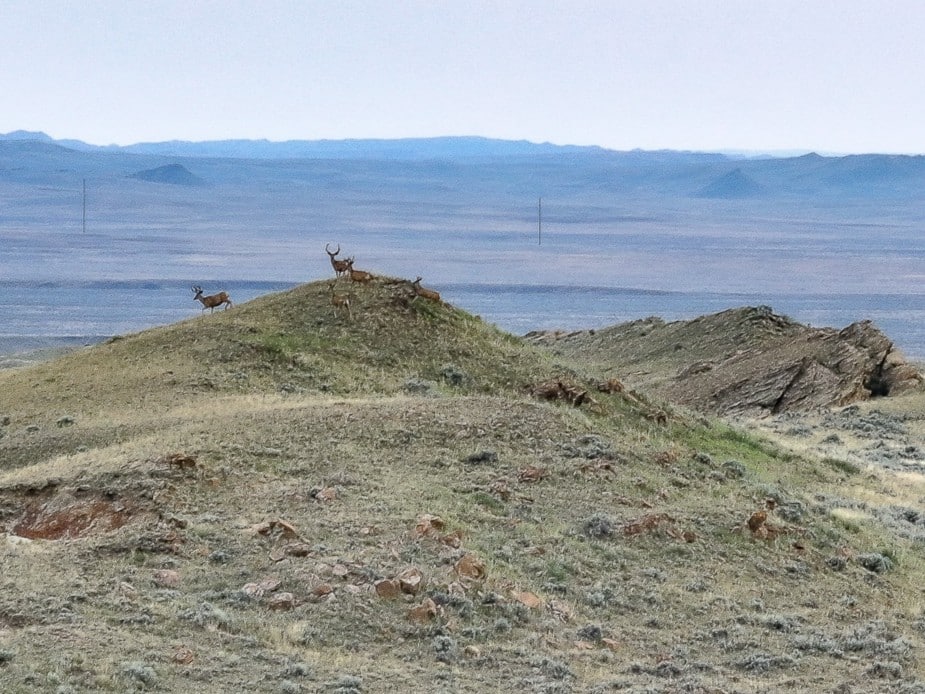
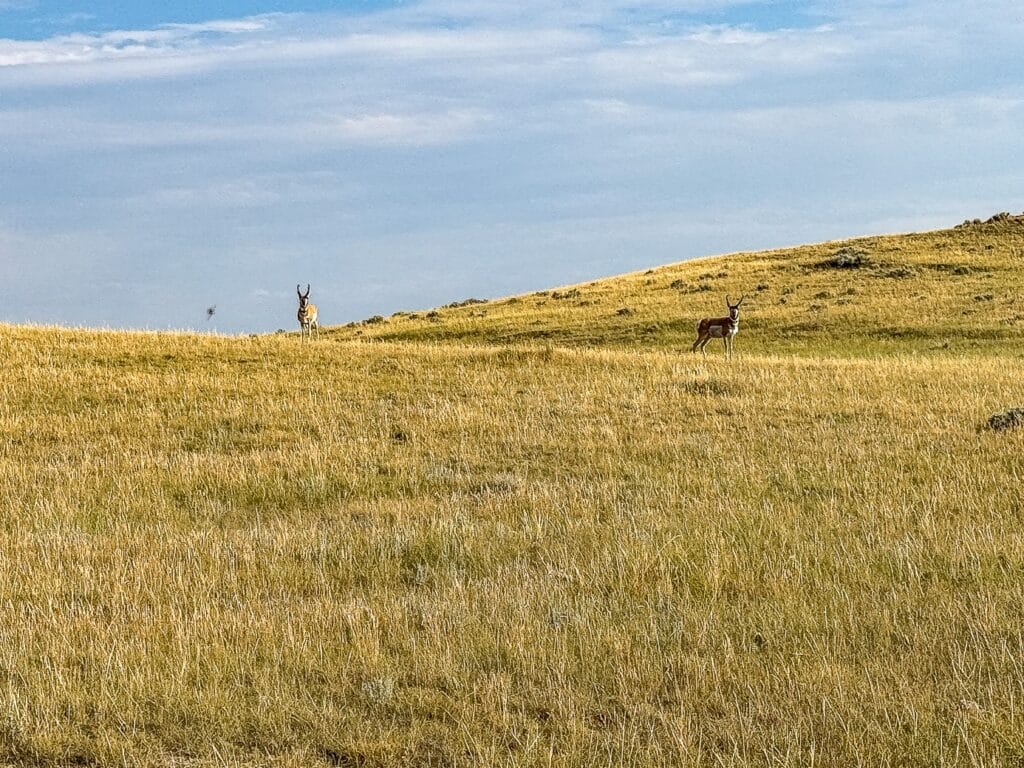
With its expansive plains and rolling hills, this area is a rewarding destination for hunters seeking a remote and rugged experience. The ranch lies within hunting district 701, where prime big-game species include mule deer and antelope—especially in the surrounding block-management areas. A mix of native grassland, creek draws, and sagebrush flats provides varied terrain. Current regulations can be confirmed with Montana Fish, Wildlife & Parks (FWP) and the Montana Department of Natural Resources & Conservation (DNRC).
The area also offers excellent upland-bird hunting across its wide-open prairies, sagebrush flats, and creek bottoms such as Little Dry Creek. Located in Montana FWP Region 7, the ranch supports healthy populations of sharp-tailed grouse, along with sage grouse, and scattered ring-necked pheasants near creek bottoms and farmsteads. Mourning doves are also common during the early fall season. The terrain is expansive and open, rewarding those with hunting dogs and a willingness to cover ground amid classic eastern Montana prairie scenery.
 |
 |
Founded around 1896 by hunter Arthur Jordan, this small cow town quickly grew to include saloons, stores, blacksmiths, and livery stables. When the homestead era arrived in the late 1910s, residents sought to form their own county. Garfield County was created, and after much debate among surrounding towns, Jordan was chosen as the county seat. Incorporated in 1951, it remains Montana’s smallest and most isolated county seat.
Many of the false-front buildings lining Main Street—some more than 80 years old—have remained essentially unchanged since the community’s early days. The town is home to cowboys and farmers for whom cattle brandings and long nights in the tractor are a way of life, and nearly everyone can ride a horse and rope a calf.
Famous 19th-century photographer L.A. Huffman called the area “The Big Open,” National Geographic termed it “Jordan Country,” and others dubbed it “The Big Dry.” Garfield County spans 4,847 square miles with just 1,173 people, yet it is home to 74,262 cattle and 12,587 sheep—making it one of the most sparsely populated and remote areas in the United States.
Long before Arthur Jordan arrived, dinosaurs roamed here over 66 million years ago. Three Tyrannosaurus rex skeletons have been unearthed near Jordan—the first in 1902, the second in 2014, and the third in 2016—and paleontologists continue to search the surrounding area. To learn more about Montana’s dinosaurs or to participate in a dig, visit the Garfield County Museum in Jordan, one of fourteen stops along the Montana Dinosaur Trail.
According to the Department of Natural Resources & Conservation (DNRC), Antelope Springs Ranch owns 88 water rights, including 2 domestic rights and 86 stock rights, with priority dates as early as 1916. For additional information regarding the water rights, please contact listing broker Mike Swan at 406.522.7342.
All water rights in Montana are subject to eventual re-adjudication by the Montana Water Court and, as a result of that process, may be changed as to validity, amount, priority date, place of use and other such changes as the Court determines. This water district is currently under the Preliminary-Temporary Decree as classified by the Department of Natural Resources & Conservation (DNRC). The seller has made all of the filings currently required and will transfer the water rights as they currently stand with no warranty of future viability. All water rights appurtenant to and for the benefit of the ranch will be conveyed to the Buyer at closing of a sale.
REAL ESTATE TAXES
The real estate taxes for 2025 were approximately $17,800.
MINERAL RIGHTS
The seller will convey with the ranch 100% of whatever mineral, oil, gas, geo-thermal, hydro-carbon and gravel rights it actually owns, subject to reservations by previous owners. The seller makes no representation as to the quantity or quality of any mineral or other subsurface rights appurtenant to the ranch.
UTILITIES & SERVICES
Northwestern Energy supplies power via overhead lines that enter the property from the southwest.
Triangle Communications provides landline phone and fiber internet. For additional internet and television options, buyer may want to investigate satellite providers.
Cellular coverage delivered by Verizon is minimal throughout the ranch but can be accessed via wi-fi at headquarters and the corrals.
The propane tank is owned and can be filled by providers in the area.
Stock water is produced by a combination of surface water, springs & reservoirs.
Antelope Springs Ranch is a predominantly deeded eastern Montana grass ranch that has been managed under regenerative principles for thirteen years. Operations incorporate rotational grazing, soil-health restoration, wildlife-corridor protection, and water-wise practices, resulting in healthy grasslands and resilient herd performance. Extensive stock-water distribution and a conservative stocking strategy enable efficient use of the range through a proven, low-input model—demonstrating that disciplined stewardship and sound economics reinforce one another rather than compete.
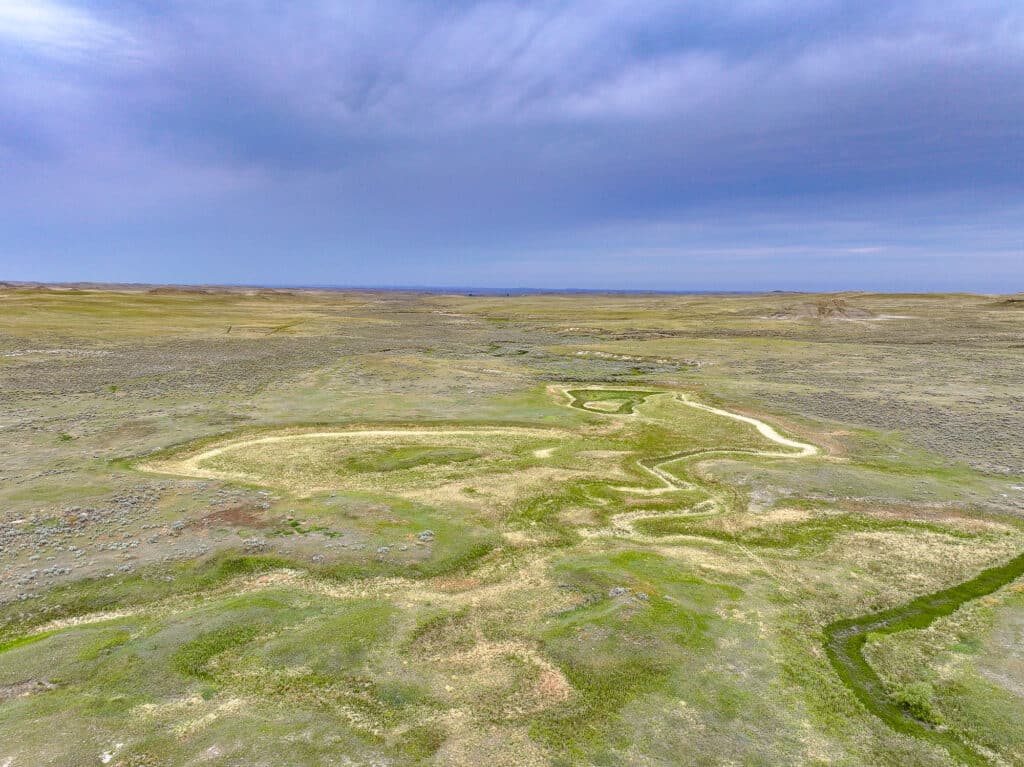
Throughout this period, the ranch has engaged Snaplands, an independent rangeland-monitoring firm, to track soil and grassland health using standardized field protocols and fixed photo points—providing a documented, third-party record of the land’s improving condition.
We are seeking a values-aligned buyer committed to continuing this holistic management approach and the long-term stewardship of the land. To support that continuity, we request a six-month transition period with our current on-site co-managers, the Smith Family, and we welcome offers that keep this proven team in place beyond the transition. For a buyer who shares our conviction that healthy land and a healthy operation go hand in hand, Antelope Springs Ranch offers a rare chance to step into a mature regenerative system—and the people who built it—on day one.
OFFERING PRICE and CONDITIONS OF SALE
Antelope Springs Ranch, as previously described herein, is offered for sale at $21,500,000 cash. The conditions of the sale are as follows:
- All offers to purchase or letters of intent must be in writing.
- All Prospective Buyers must demonstrate to the satisfaction of the Seller their absolute financial capability to purchase the property prior to scheduling an inspection of the Property.
- Earnest money deposit will be due upon completion of a fully executed contract, and all earnest money deposits will be held in escrow by Flying S Title Company of Billings, Montana.
- The Sellers will provide and pay for a standard owner’s title insurance policy. Title to the real property will be conveyed by a warranty deed.
- All the appurtenant water rights controlled by the property will be transferred to the Buyer at Closing.
- The Sellers will convey to the Buyer all mineral rights they own, subject to reservations by previous owners.
- Buyers’ Brokers are welcome and invited to contact Mike Swan with Swan Land Company for additional information and to set up a private tour of the property.
- Any additional documentation provided to Prospective Buyers and their Agents related to and expanding upon the information contained in this offering brochure may be subject to terms of a Confidentiality Agreement to be signed by the Prospective Buyer and their Agents prior to the delivery of such documentation.
The Sellers reserve the right to effect a tax-deferred exchange for other real property in accordance with provisions in Section 1031 of the Internal Revenue Code. The Buyer will not be required to incur any additional expenses nor to step into the chain of title on any property which the Seller may acquire.
This entire Offering is subject to errors, omissions, prior sale, change, or withdrawal without notice and approval of purchase by the Sellers. Information regarding land classifications, acreages, carrying capacities, crop yields, potential profits, etc., are intended only as general guidelines and have been obtained from sources deemed reliable; however, accuracy is not warranted or guaranteed by the Sellers or Swan Land Company. Prospective Buyers should verify all information to their sole and complete satisfaction.
TERMS OF INSPECTION
A 48-hour notice is requested to make proper arrangements for an inspection of Antelope Springs Ranch.
Swan Land Company has been authorized by the Seller to act as their Exclusive Real Estate Broker on the sale of Antelope Springs Ranch. Since 2002, we have focused on the brokerage of significant ranches, farms, and recreational properties throughout the Rocky Mountain West.
This Offering is based on information believed to be correct; however, it is subject to errors, omissions, prior sale, and change or withdrawal without notice. Information contained herein has been provided by the Sellers or obtained from other sources deemed reliable. The Agent does not, however, guarantee accuracy and recommends that any Prospective Buyer conduct an independent investigation.
PLEASE SUBMIT YOUR EMAIL TO VIEW OFFERING BROCHURE.
Michael S. Swan