When evaluating a Western ranch, acreage is only part of the story. Two properties with the same number of acres can have dramatically different agricultural potential depending on water availability, vegetation, soil, climate, elevation, topography, and how the land has been managed.
One of the most important concepts for understanding a ranch’s agricultural potential is carrying capacity.
For ranch buyers, sellers, and landowners, understanding carrying capacity provides a more meaningful way to evaluate the productive potential of a property than simply looking at total acreage.
What Is Carrying Capacity?
In ranching, carrying capacity generally refers to the amount of livestock a property can support over a given period of time while maintaining the health and productivity of the land.
Carrying capacity is often expressed in terms of animal unit months, or AUMs. An AUM represents the amount of forage needed to support one animal unit for one month. An animal unit is a standardized measure used to compare the forage requirements of different classes and sizes of livestock.
For example, a ranch might be described as having an estimated annual carrying capacity of a certain number of AUMs rather than simply being described as having a certain number of acres.
This distinction matters. Acreage tells you how much land you own, while carrying capacity helps tell you what that land can support.
Why Carrying Capacity Matters When Buying a Ranch
For someone purchasing a working ranch, carrying capacity can have a direct relationship to the property’s agricultural operation and economics.
Consider two hypothetical 5,000-acre ranches. The first has productive native grasslands, reliable water, good soils, moderate terrain, and a history of well-managed grazing. The second has less productive vegetation, limited water, steeper terrain, and a shorter growing season.
Although both properties contain 5,000 acres, their agricultural capabilities could be substantially different.
This is why experienced ranch buyers look beyond price per acre. They also want to understand how many AUMs the ranch has historically supported, the type and quality of available forage, the amount of irrigated versus non-irrigated acreage, the property’s water resources, grazing seasons, past stocking rates, soil and vegetation types, elevation, topography, fencing, livestock infrastructure, hay production potential, and performance during drought.
A property’s carrying capacity can help put its acreage into a more useful agricultural context.
Carrying Capacity Isn’t Simply “Cows per Acre”
One common misconception is that carrying capacity can be reduced to a simple formula such as one cow per 100 acres.
In reality, Western ranches vary enormously. A property with productive irrigated pasture may support significantly more livestock per acre than a dryland range with limited precipitation. Likewise, a high-elevation summer grazing property may have a very different carrying capacity and grazing season than a low-elevation winter range.
Even within the same ranch, carrying capacity can vary from pasture to pasture.
Factors such as slope, aspect, soil type, vegetation, precipitation, elevation, and access to water can all influence how much usable forage is available.
As a result, carrying capacity should always be evaluated in the context of the specific property rather than through a generalized acreage-to-livestock ratio.
The Role of Water
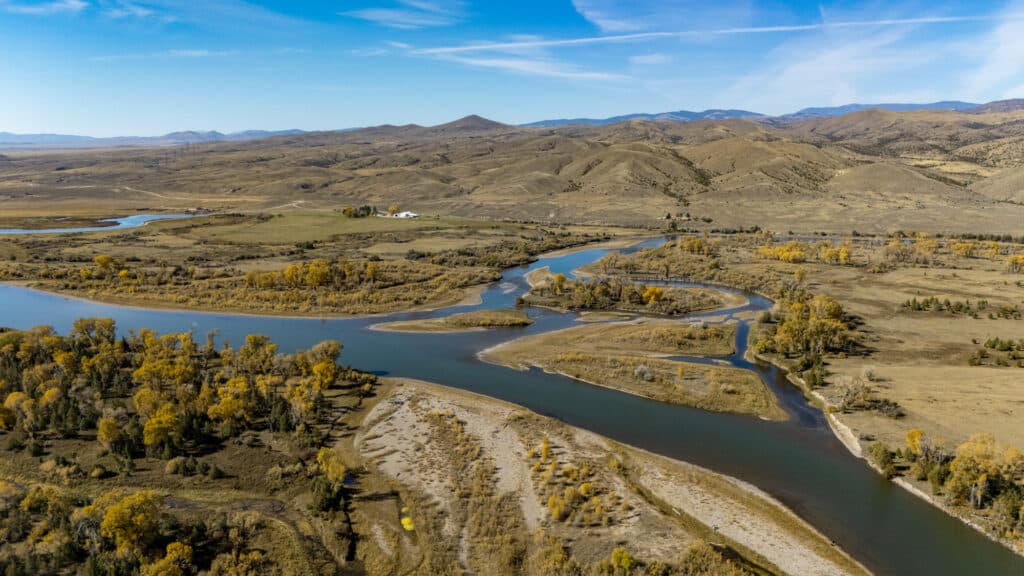
In much of the Western United States, water is one of the most important factors influencing a ranch’s productivity.
A ranch may have thousands of acres of grassland, but if livestock cannot reliably access water throughout the grazing area, not all of that acreage may be equally useful.
When evaluating a ranch, buyers should consider both the quantity and distribution of water. Creeks, rivers, springs, wells, stock ponds, reservoirs, irrigation systems, and seasonal water sources can all contribute to a property’s agricultural potential.
Water infrastructure matters as well. Tanks, pipelines, wells, pumps, reservoirs, and stock ponds can determine whether livestock can effectively utilize different portions of a ranch.
For this reason, evaluating water should go hand in hand with evaluating carrying capacity.
Forage Quality and Quantity
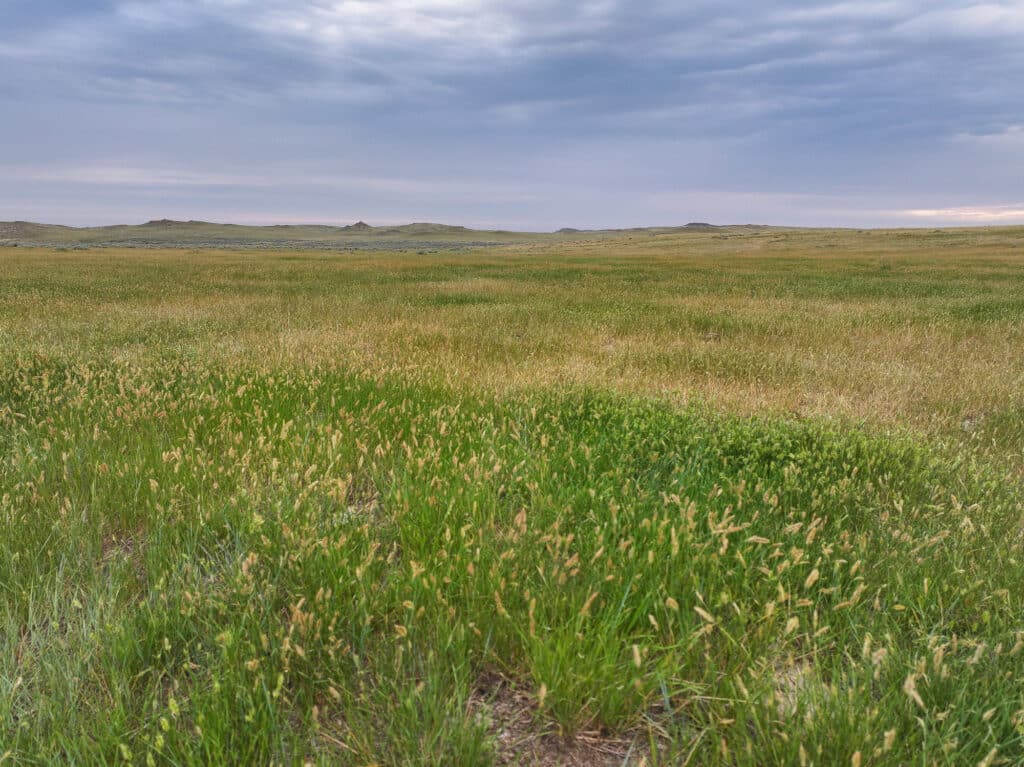
Carrying capacity ultimately depends heavily on forage.
Native grasslands, improved pasture, hay meadows, irrigated fields, brush, and timbered country can all contribute differently to a ranch’s overall productivity.
Simply having vegetation, however, doesn’t necessarily mean a property has high carrying capacity. The quality, availability, seasonality, and utilization of that forage matter.
A ranch may produce abundant grass during a wet spring but have considerably less available forage later in the summer. Another property may have lower overall forage production but a longer grazing season.
This is one reason historical ranch records can be valuable when evaluating a property.
Stocking Rate vs. Carrying Capacity
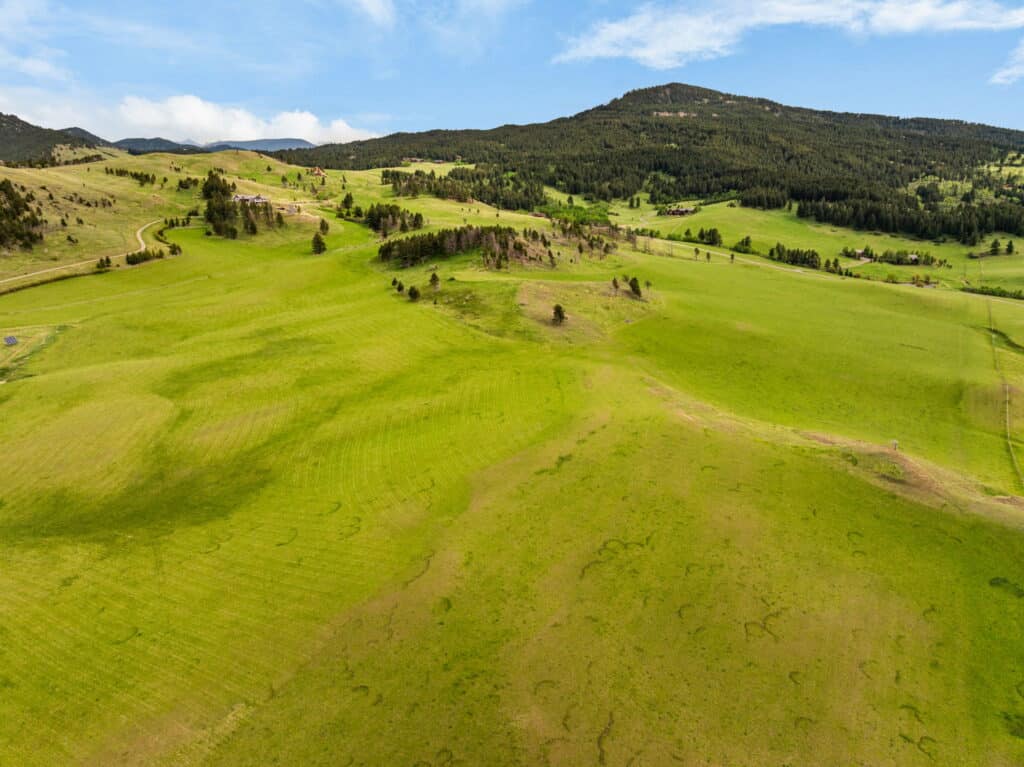
It’s important to distinguish stocking rate from carrying capacity.
Stocking rate describes the number of livestock placed on a particular area for a particular period. Carrying capacity describes the level of use the land can sustain over time without degrading the resource.
Those numbers aren’t necessarily the same.
A ranch may have been stocked heavily during a particularly productive year without that stocking rate being sustainable over the long term. Conversely, a conservative stocking program may intentionally keep livestock numbers below the property’s estimated carrying capacity to maintain forage reserves and improve resilience during drought.
For a prospective buyer, knowing the property’s historical stocking rate is useful, but understanding how that number relates to sustainable carrying capacity is even more important.
Carrying Capacity Can Change
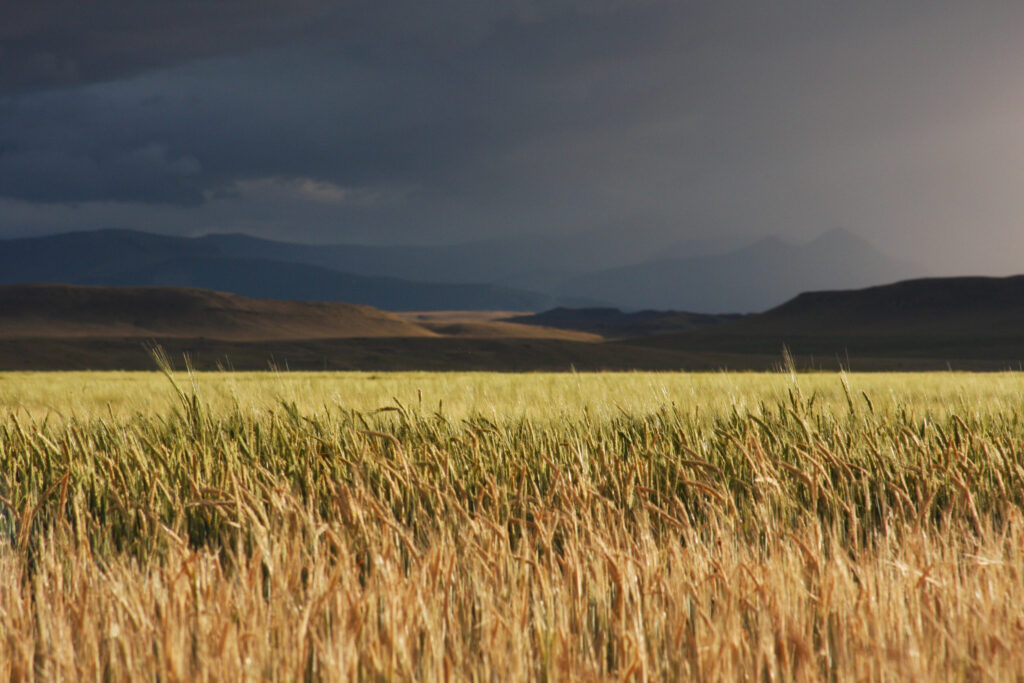
Carrying capacity isn’t necessarily a fixed number.
Weather, precipitation, grazing management, wildfire, invasive species, drought, changes in vegetation, irrigation improvements, and other factors can all influence a property’s productive capacity.
A wet year may produce significantly more forage than a dry year. Likewise, a well-managed grazing program may improve forage condition over time, while poor management can reduce productivity.
This variability is particularly important in the West, where many ranches operate in environments characterized by significant fluctuations in precipitation and growing conditions.
Instead of thinking about carrying capacity as one permanent number, it can be more useful to view it as an estimate that exists within a range of conditions.
Evaluating Carrying Capacity When Buying a Ranch
When considering the purchase of a working ranch, prospective buyers should look beyond the acreage and ask how the property has actually performed over time.
Historical grazing records can be particularly valuable. Understanding how many livestock the ranch has supported, how long they have typically remained on the property, and how the operation has performed during both favorable and difficult years can provide valuable context.
The length of the grazing season is also important. A ranch that supports livestock for several months of the year has a different operating profile from a property that provides year-round grazing.
It is also important to understand how much of the total acreage is actually usable for grazing. A ranch may include steep terrain, timber, wetlands, rocky ground, roads, buildings, riparian areas, or other acreage that contributes to the property’s overall size but may have limited livestock utility.
Water distribution should also be carefully considered. A ranch with abundant water in one portion of the property may have a very different grazing profile from a ranch where water is distributed throughout the pastures.
Hay production can also play an important role. Irrigated meadows and hay ground can provide feed during winter or other periods when pasture production is limited, adding significant value to a working ranch.
Finally, understanding how a property has performed during drought years can provide valuable insight into its resilience.
Why Buyers Should Look Beyond Price Per Acre
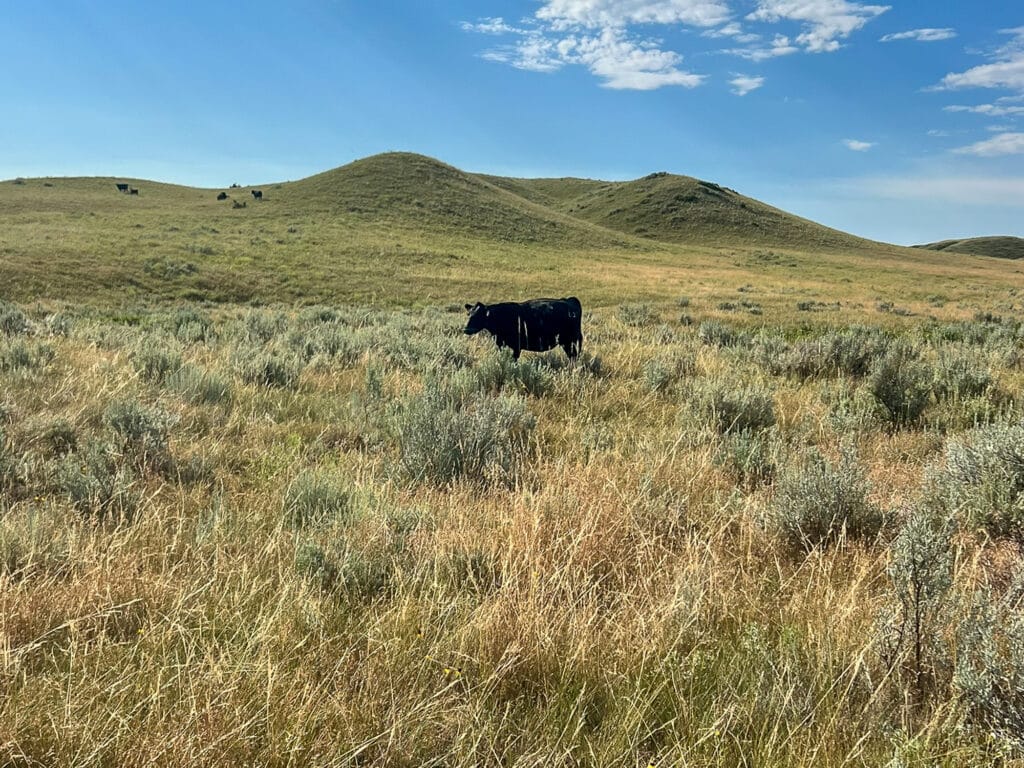
Price per acre remains an important metric in ranch real estate, but it doesn’t tell the entire story.
A more productive property may command a higher price per acre because it offers greater agricultural utility, stronger water resources, better improvements, or other characteristics that contribute to its overall value.
For a working ranch buyer, it can therefore be useful to consider the relationship between purchase price, acreage, water, improvements, and productive capacity.
The goal isn’t simply to find the property with the lowest price per acre. It’s to understand what you’re actually acquiring and how the land can function as a whole.
Carrying Capacity and the Future of a Ranch
For many Western landowners, a ranch represents more than an agricultural operation. It can be a family legacy, recreational property, conservation asset, investment, or a combination of these uses.
Understanding carrying capacity can help owners make informed decisions about how they want to use and manage the land.
It can also provide an important baseline for considering future opportunities, whether that means maintaining a traditional cattle operation, improving grazing infrastructure, expanding irrigation, producing hay, leasing grazing rights, or integrating conservation objectives.
The most valuable ranches are often those where the land’s natural resources, infrastructure, water, and management come together in a way that makes the property both productive and resilient.
The Bottom Line
When evaluating a Western ranch, acres are only the beginning of the conversation.
Carrying capacity provides a way to better understand the relationship between land, forage, water, livestock, and management. It can help buyers ask better questions, help sellers communicate the property’s productive characteristics, and help landowners make more informed decisions about the future of their property.
Every ranch is different. A property’s true agricultural potential depends on the combination of its natural resources, infrastructure, management history, and location.
For anyone considering buying or selling a Western ranch, understanding those details is an important part of understanding the land itself.
Visit our other blogs:
Fall: The Payoff Season on a Western Cow-Calf Ranch
Swan Land Company